
Home Appraisal: What It Is, How It Works & What to Expect
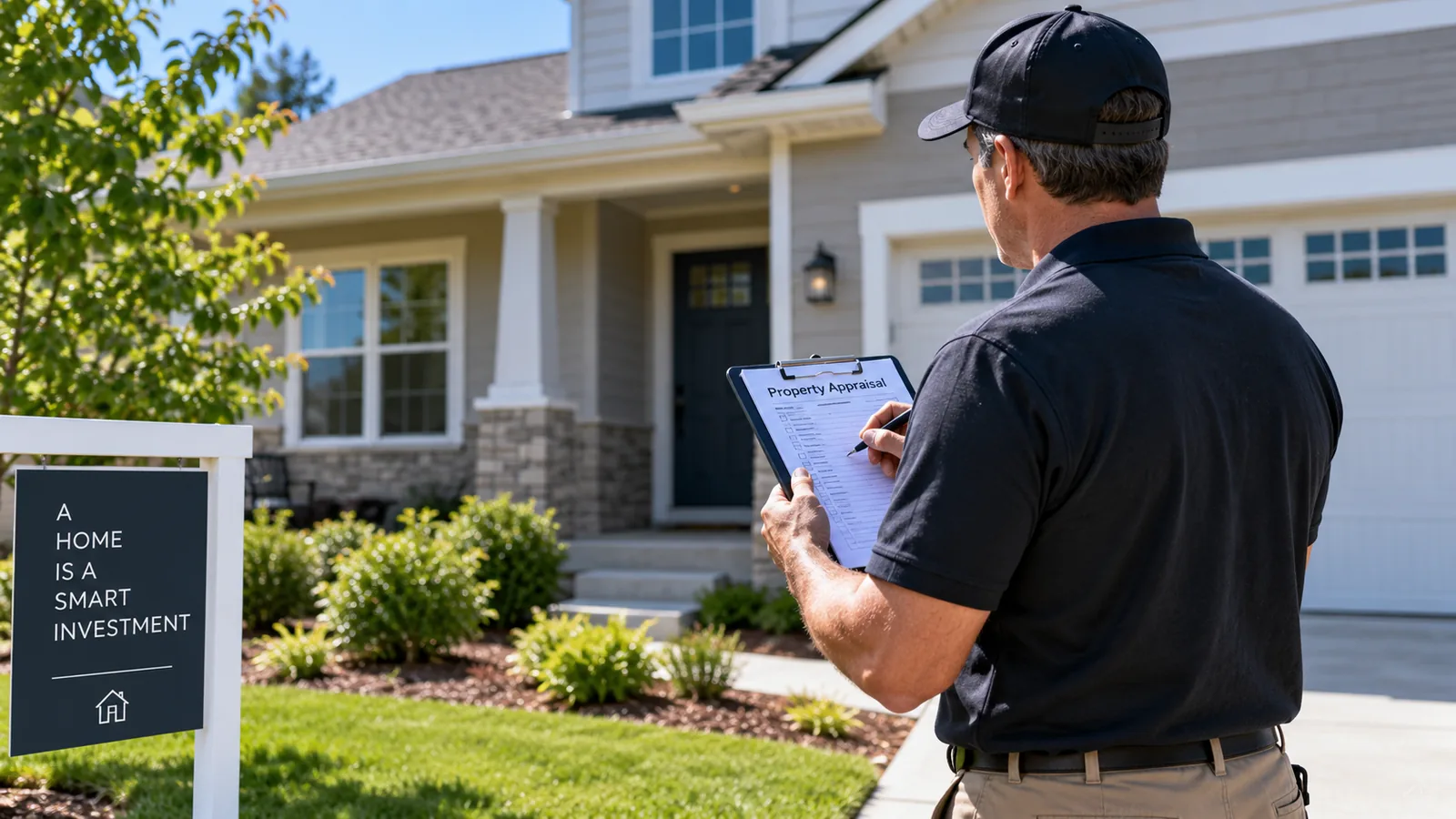
A home appraisal is an opinion of a property’s market value developed for a specific transaction or lending purpose.
If you are buying a home with a mortgage, the appraisal can become one of the most important steps between an accepted offer and closing. The lender uses the valuation to help determine whether the property provides adequate collateral for the loan.
But the appraisal is often misunderstood.
It is not the same as a home inspection. It does not guarantee that the property is worth what you agreed to pay. And not every mortgage transaction necessarily follows the traditional model in which an appraiser visits the property in person.
Modern mortgage valuation can involve several approaches depending on the lender, loan, property, available data, and applicable program requirements.
This guide explains how the home appraisal process works, what appraisers look for, how value is developed, how long the process may take, how appraisal differs from inspection, how to review the report, and what your options may be if the appraised value comes in below the purchase price.
Home Appraisal: The Short Answer
A home appraisal is a professional valuation of real property.
In a financed home purchase, the lender typically determines what type of valuation is needed and arranges the appraisal or other permitted valuation process.
The valuation may consider:
- the property’s size and design;
- condition and quality;
- bedrooms and bathrooms;
- site characteristics;
- significant features and improvements;
- recent sales of comparable properties;
- neighborhood characteristics;
- location;
- and current market conditions.
The result is an opinion of value used as part of the lender’s underwriting and collateral review. The purchase price and the appraised value are not necessarily the same thing.
The purchase price is the amount the buyer and seller agreed to in the contract. The appraised value is the value conclusion produced through the applicable valuation process.
And neither one should be confused with a detailed property-condition inspection.
Why Lenders Use Home Appraisals
A mortgage is secured by the property being purchased.
Because the lender may have a financial interest in the property if the borrower fails to repay the loan, the lender needs a reasonable basis for evaluating the property’s value.
The appraisal or other valuation helps the lender assess that collateral.
It can also help identify situations where the agreed purchase price is significantly higher than the value supported by the available property and market evidence.
An appraisal does not by itself mean the mortgage is approved. The lender still has to evaluate other underwriting factors such as:
- borrower income;
- assets;
- credit;
- debt obligations;
- loan-program requirements;
- property eligibility;
- title;
- insurance;
- and other conditions.
If you want the broader financing sequence, our guide to how to get a mortgage explains the process from preparation through underwriting and closing.
When Does the Home Appraisal Happen?
In a typical financed purchase, appraisal work occurs after the buyer and seller have entered into a purchase agreement and the buyer’s lender is moving the loan through underwriting.
The exact sequence can vary, but the process commonly looks like this:
- buyer and seller sign the purchase agreement;
- buyer completes the lender’s required loan steps;
- lender determines what valuation approach is required;
- appraisal or property data is ordered where necessary;
- valuation is completed and reviewed;
- lender continues underwriting;
- appraisal-related issues are addressed before closing.
That makes the appraisal one part of the broader contract-to-closing period.
For the complete timeline surrounding inspections, financing, appraisal, title work, final loan approval, and closing, see our guide to what happens after an offer is accepted on a house.
Is a Traditional Home Appraisal Always Required?
Not necessarily. Many consumers still picture an appraisal as one person arriving at the property, walking through it, taking measurements and photographs, researching comparable sales, and later producing a report.
That traditional process still exists. But mortgage valuation has expanded beyond one format.
For example, Fannie Mae’s current property-valuation framework includes several possible valuation paths for eligible loans.
Modern Home Valuation at a Glance
| Valuation path | What happens | Important buyer note |
|---|---|---|
| Value acceptance | Eligible lender-submitted property value may be accepted without a traditional appraisal | Not every transaction qualifies |
| Desktop appraisal | Appraiser develops the opinion of value without personally visiting the property | Relies on available property and market data |
| Hybrid appraisal | Property information is collected separately and provided to an appraiser | The appraiser develops the final valuation |
| Traditional appraisal | Appraiser visits the property and performs the valuation | Often used for complex properties or when property or market data is sparse |
Fannie Mae also has value acceptance + property data, in which standardized property information may be collected even though a traditional appraisal is not required.
These options should not be interpreted as choices every borrower can simply select. The lender and applicable mortgage program determine which valuation path is available and appropriate.
What Do Home Appraisers Look For?
It is easier to understand appraisal value if you think about the analysis through three broad lenses:
Property → Comparable Sales → Market and Location
The appraiser is not simply walking through the home and assigning arbitrary dollar amounts to individual features.
The goal is to develop a supportable opinion of market value.
1. The Property
Property characteristics can include:
- overall size;
- lot characteristics;
- floor plan;
- design;
- number of bedrooms and bathrooms;
- quality of construction;
- apparent condition;
- age;
- renovations and improvements;
- garages or other parking;
- basements;
- accessory structures;
- views;
- pools;
- and other features that may affect market value.
The importance of each feature depends on the property and market. A swimming pool, for example, does not create the same value effect in every neighborhood.
2. Comparable Sales
Comparable sales, often called comps, are recently sold properties that provide evidence about how the market values similar homes.
Appraisers may consider factors such as:
- location;
- property type;
- size;
- condition;
- quality;
- age;
- lot characteristics;
- features;
- and date of sale.
The comparable properties do not have to be identical. Differences can be analyzed and reflected in the valuation process. What matters is whether the selected sales provide meaningful evidence about the subject property.
3. Market and Location
A house does not exist in isolation. Appraisers may also consider:
- neighborhood characteristics;
- supply and demand;
- recent market activity;
- market trends;
- location;
- access;
- external influences;
- and factors affecting buyer demand.
The same physical house could command different prices in different markets because location and buyer demand differ.
Do Renovations Increase Appraised Value?
They can, but not necessarily dollar for dollar. Suppose a homeowner spends $40,000 remodeling a kitchen.
That does not automatically mean the appraised value rises by $40,000. The appraisal is concerned with how the market responds to the property and its characteristics.
An improvement may contribute value if buyers in that market are willing to pay more for it.
But the contribution can be:
- greater than the project cost;
- less than the project cost;
- difficult to isolate;
- or minimal in some markets.
The same principle applies to:
- flooring;
- bathrooms;
- roofing;
- windows;
- landscaping;
- additions;
- pools;
- finished basements;
- and other upgrades.
Homeowners should therefore avoid treating renovation receipts as guaranteed appraisal adjustments.
Does Condition Matter in a Home Appraisal?
Yes, condition can matter because it can affect marketability and value. But appraisal condition review is different from a detailed home inspection.
An appraiser may observe visible condition issues that affect:
- market value;
- property eligibility;
- safety;
- soundness;
- or lender/program requirements.
That does not mean the appraiser is performing a comprehensive inspection of every system. The appraisal is primarily a valuation exercise.
Home Appraisal vs. Home Inspection
A home appraisal and a home inspection answer different questions.
| Question | Home appraisal | Home inspection |
|---|---|---|
| Main purpose | Develop an opinion of property value | Evaluate observable property condition |
| Primary use | Lender collateral and underwriting | Buyer due diligence |
| Main output | Valuation/appraisal report | Inspection report |
| Focus on defects | Mainly where relevant to value, marketability or program requirements | Detailed review of accessible systems and components |
| Determines market value? | Yes, valuation is the primary purpose | No |
| Replaces the other? | No | No |
A favorable appraisal does not mean the roof, plumbing, electrical system, HVAC, foundation, or other components are problem-free.
For condition-focused due diligence, use our home inspection checklist for buyers.
How the Home Appraisal Process Works
The exact process depends on the transaction and valuation method, but a financed purchase commonly follows these stages.
1. The Lender Determines the Valuation Requirement
After the mortgage application is underway, the lender determines what property valuation is required.
That might be:
- traditional appraisal;
- desktop appraisal;
- hybrid appraisal;
- another eligible valuation method;
- or, in some transactions, value acceptance.
The buyer generally should not assume a traditional appraisal will automatically be required.
2. Property Information Is Collected
If a physical visit is part of the process, the appraiser may observe and document the property.
Depending on the assignment, this can include:
- exterior;
- interior;
- room count;
- dimensions;
- condition;
- quality;
- materials;
- improvements;
- amenities;
- site characteristics;
- and photographs.
For hybrid or other valuation approaches, property information may instead come from approved data sources or a separate property-data collection process.
3. The Appraiser Researches the Market
The appraiser analyzes market evidence relevant to the property.
That can include:
- recent comparable sales;
- active or pending listings where relevant;
- neighborhood trends;
- market conditions;
- property records;
- and other reliable market data.
4. The Appraiser Develops the Opinion of Value
The property and market evidence are analyzed together.
The process may involve comparing the subject property with selected comparable sales and considering material differences.
The appraisal is therefore more than an average of nearby sales.
5. The Appraisal Report Is Completed
The appraiser documents the analysis and final opinion of value.
The report may include:
- property description;
- photographs;
- comparable sales;
- market data;
- adjustments;
- condition information;
- maps;
- comments;
- and the final value conclusion.
6. The Lender Reviews the Valuation
Receiving the appraisal does not automatically end the valuation process.
The lender may review the report for:
- completeness;
- consistency;
- property eligibility;
- underwriting requirements;
- appraisal quality;
- or issues requiring clarification.
The lender may request corrections or additional information where appropriate.
How Long Does a Home Appraisal Take?
There is no reliable national timeline that applies to every appraisal. The physical property visit, when one is required, may take considerably less time than the full appraisal process.
The overall timeline can include:
- ordering;
- scheduling;
- travel;
- property observation;
- comparable-sale research;
- market analysis;
- report preparation;
- lender review;
- and revisions or clarification.
Timing can be affected by:
- appraiser availability;
- location;
- rural or unusual properties;
- market activity;
- property complexity;
- availability of comparable sales;
- and lender workflow.
Fannie Mae’s consumer appraisal guidance similarly notes that the overall timeline can depend on appraiser availability, property complexity, and preparation of the report.
If your appraisal is delaying the transaction, ask your lender for the current status rather than assuming a standard number of days applies.
How Much Does a Home Appraisal Cost?
There is no universal appraisal fee. The cost can vary depending on factors such as:
- property type;
- location;
- complexity;
- appraisal format;
- appraiser availability;
- scope of work;
- and transaction requirements.
A buyer may be charged for the appraisal or valuation as part of the mortgage process. That is different from being charged for the copy of the appraisal.
For certain applications secured by a first lien on a dwelling, CFPB appraisal-copy rules require the creditor to provide copies of applicable appraisals and other written valuations without charging the applicant for the copy itself.
The creditor can still charge a reasonable fee for the actual appraisal or valuation where permitted.
When Does the Buyer Receive the Appraisal?
For credit applications covered by federal Regulation B appraisal-copy rules, creditors generally must provide copies of appraisals and other written valuations:
- promptly after completion; or
- no later than three business days before consummation for closed-end credit,
whichever is earlier. The rule includes specific coverage and waiver provisions.
That means it should not be simplified into the claim that every homebuyer always receives a traditional appraisal exactly three days before closing. The rule can also apply to other written valuations, not only traditional appraisals.
What Is in a Home Appraisal Report?
A traditional appraisal report may contain much more information than the final value number.
Depending on the assignment, the report can include:
- property identification;
- neighborhood or market information;
- site characteristics;
- improvement details;
- condition and quality;
- comparable sales;
- photographs;
- maps;
- adjustment analysis;
- comments about significant differences;
- reconciliation;
- and the final opinion of market value.
Buyers should not treat the first page or value figure as the entire report. The supporting analysis matters.
How to Review Your Home Appraisal Report
You do not need to become an appraiser to review the report intelligently. Start by checking factual information.
Appraisal Report Review Checklist
Confirm:
- property address — is the correct home being analyzed?
- property type — is it described correctly?
- square footage — does anything appear obviously inconsistent?
- bedroom and bathroom count — are the basics accurate?
- lot and site information — are significant characteristics represented?
- major improvements — are meaningful updates omitted or misstated?
- condition — does the description appear reasonable?
- comparable properties — do they appear relevant?
- location differences — are important distinctions apparent?
- sale information — do the comparable-sale details appear plausible?
- final value — does the report explain how the conclusion was reached?
An unexpected value does not automatically mean the appraisal is wrong. The question is whether the analysis is supported.
What Happens if the Appraisal Matches or Exceeds the Purchase Price?
If the appraised value supports the purchase price, the lender generally does not face a valuation shortfall based solely on that value.
But that does not mean the mortgage is fully approved. Other underwriting conditions can remain.
Examples include:
- borrower documentation;
- income verification;
- assets;
- credit;
- title;
- insurance;
- property conditions;
- and final lender requirements.
The appraisal clears one issue. It does not clear the entire transaction.
What Happens if the Home Appraisal Comes in Low?
A low appraisal means the appraised value is below the purchase price.
Suppose a buyer agrees to pay $500,000 but the appraisal concludes $485,000. The $15,000 difference does not automatically mean the buyer must bring exactly $15,000 more to closing.
The actual financing effect depends on:
- loan structure;
- down payment;
- lender underwriting;
- applicable loan-to-value calculations;
- contract terms;
- and how the parties respond.
A low appraisal creates a decision point. The best response begins with understanding why the value is lower.
Low-Appraisal Decision Path
Use this sequence:
Review the report
→ Determine whether the issue is value or accuracy
→ Ask about reconsideration if warranted
→ Evaluate negotiation and financing choices
→ Check contract rights before deciding
Step 1: Read the Appraisal
Do not react only to the final number.
Review:
- property facts;
- comparable sales;
- adjustments;
- condition descriptions;
- omitted features;
- location analysis;
- and supporting comments.
Step 2: Separate a Low Value From an Appraisal Error
A value can be below the purchase price even when the appraisal is competently performed.
For example, competing buyers may have pushed the contract price above what recent comparable sales support.
That is different from a report containing:
- incorrect square footage;
- wrong room count;
- omitted improvements;
- factual errors;
- inappropriate comparable properties;
- or material information the appraiser did not consider.
Step 3: Ask the Lender About a Reconsideration of Value
If you identify a legitimate concern, communicate with the lender. A reconsideration of value, or ROV, is a process for requesting review of the appraisal or valuation.
CFPB guidance on reconsideration of value notes that consumers may raise concerns involving issues such as:
- factual errors;
- omissions;
- inadequate comparable properties;
- or evidence of prohibited bias.
An ROV is not simply a request saying “The value is too low. Please make it higher.” Useful requests identify specific, supportable concerns.
Step 4: Evaluate Transaction Options
If the appraisal appears supportable but the value remains below the purchase price, possible options can include:
- renegotiating the price;
- seller reducing the price;
- buyer increasing cash contribution;
- buyer and seller meeting somewhere in between;
- restructuring financing if the lender permits;
- using applicable appraisal or financing rights;
- or terminating the transaction if the contract permits.
It should be noted that no single option is automatic.
Step 5: Read the Purchase Agreement
The contract determines the parties’ rights. An appraisal contingency, financing contingency, appraisal-gap clause, waiver, deadline, or other contractual term can materially change the buyer’s options.
Do not assume that a low appraisal automatically gives a buyer the right to cancel and recover earnest money.
If the financial consequences are significant or the contract language is unclear, obtain transaction-specific professional or legal guidance.
What Is a Reconsideration of Value?
A reconsideration of value is a formal process through which concerns about a valuation can be submitted for review.
The borrower normally communicates through the lender rather than directly pressuring the appraiser.
A useful ROV request may identify:
- incorrect property facts;
- overlooked relevant features;
- questionable comparable selection;
- better-supported comparable sales;
- calculation or reporting errors;
- material omissions;
- or evidence suggesting prohibited discrimination.
An ROV does not guarantee:
- a new appraisal;
- a different appraiser;
- a higher value;
- or approval of the loan.
Its purpose is to provide a structured method for reviewing legitimate valuation concerns.
What if You Suspect Appraisal Bias or Discrimination?
Appraisal decisions must not be based on prohibited discriminatory factors. If you believe a valuation may have been affected by bias, document the specific concerns rather than relying only on the fact that the value was lower than expected.
Possible steps include:
- review the appraisal carefully;
- identify specific language, comparable choices, factual issues, or other evidence;
- contact the lender;
- ask about the lender’s ROV process;
- preserve relevant documents and communications;
- use appropriate regulatory or fair-housing complaint channels if warranted.
A low appraisal by itself is not proof of discrimination. Focus on evidence.
Can the Buyer Contact the Appraiser Directly?
Mortgage appraisal independence rules can limit how parties communicate with an appraiser about value.
Buyers generally should raise valuation concerns through their lender rather than trying to persuade the appraiser directly. That is especially important after the appraisal has been completed.
Your lender can explain:
- whether clarification is appropriate;
- whether an ROV is available;
- what evidence can be submitted;
- and what process must be followed.
How Sellers Can Prepare for a Home Appraisal
A seller cannot legitimately control the appraised value. But the seller can make it easier for the appraiser or property-data collector to understand the property accurately.
Useful preparation can include:
- making the property accessible;
- ensuring rooms and important areas can be entered where a visit is required;
- providing accurate information about significant improvements;
- having permits or documentation available where relevant;
- identifying major property features;
- addressing obvious maintenance or safety problems when practical;
- ensuring utilities or systems required for the transaction are accessible;
- and keeping pets safely controlled during a property visit.
The goal is accurate property information, not influencing the appraiser.
Does a Clean House Appraise for More?
Cleanliness by itself does not create a fixed appraisal adjustment. A spotless kitchen does not automatically add a specific dollar amount to the value.
However, severe neglect or condition problems can affect marketability and value. Basic preparation can also make property observation easier.
Think of cleanliness as presentation and access, not as a guaranteed valuation strategy.
Frequently Asked Questions About Home Appraisals
Is a Home Appraisal Required?
Not for every transaction. The lender and mortgage program determine what valuation is required.
Some eligible transactions may use alternatives such as value acceptance, desktop appraisal, hybrid appraisal, or another permitted valuation process.
Who Orders the Home Appraisal?
In a financed purchase, the lender generally controls the appraisal or valuation ordering process. This helps preserve appraisal independence.
Who Pays for the Home Appraisal?
A buyer may pay an appraisal or valuation charge as part of mortgage costs, but the specific arrangement depends on the transaction and lender. There is no single nationwide fee.
How Long Does a Home Appraisal Take?
There is no universal timeline. The full process can include scheduling, property observation where required, market research, report preparation, lender review, and possible revisions. Property complexity and appraiser availability can materially affect timing.
What Hurts a Home Appraisal?
Factors that can negatively affect supported market value may include:
- poor condition;
- deferred maintenance;
- inferior location characteristics;
- functional problems;
- adverse market conditions;
- less desirable features;
- and comparable sales supporting a lower value.
But no single item creates the same dollar adjustment in every market.
Can a Seller Challenge a Low Appraisal?
The borrower and lender are central to the mortgage appraisal process, but sellers can sometimes provide relevant factual information through the appropriate transaction channels.
If the parties believe the appraisal contains errors or omitted information, the buyer should ask the lender about the appropriate review or ROV process.
Can a Buyer Walk Away After a Low Appraisal?
Possibly, but not automatically. The answer depends on the signed purchase agreement, including appraisal and financing contingencies, waivers, deadlines, and other negotiated terms. Review the contract before taking action.
Can a Home Appraisal Be Higher Than the Purchase Price?
Yes. The appraised value can be:
- below the purchase price;
- equal to it;
- or above it.
A value above the contract price does not mean the buyer receives cash or instant equity guaranteed by the lender. It simply means the appraiser’s opinion of value exceeded the agreed purchase price.
Before You Move Forward After the Appraisal
A home appraisal is not just a number to glance at before closing. It is part of the lender’s evaluation of the property and can affect financing, cash requirements, negotiation, and the buyer’s next decision.
Before moving forward:
- read the appraisal report;
- confirm the basic property information;
- look at the comparable-sale analysis;
- distinguish a low value from an actual appraisal error;
- ask the lender about reconsideration of value when there is a legitimate concern;
- understand how the value affects your financing;
- review the purchase agreement before assuming you can renegotiate or cancel;
- and remember that the appraisal does not replace a professional home inspection.
If your purchase is already under contract, continue with our guide to what happens after an offer is accepted on a house for the broader path through appraisal, financing, title work, final approval, and closing.
If you are still planning the entire buying process, our step-by-step guide to how to buy a house covers the journey from preparation through closing.