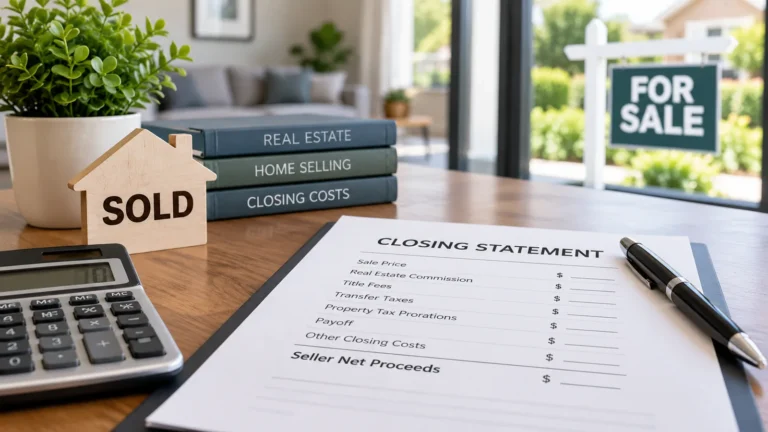
How to Sell a House: 15 Steps From Prep to Closing

If you want to know how to sell a house, the process is easier to manage when you break it into clear decisions: whether selling fits your plans, what the sale may actually net you, how to prepare and price the property, how to market it, how to compare offers, and how to get from contract acceptance to closing without losing control of deadlines or costs.
Selling a home is not simply a matter of choosing a list price and waiting for a buyer. Your mortgage payoff, property condition, disclosure duties, pricing strategy, sale method, buyer contingencies, appraisal, title issues, taxes, closing costs, and move-out plan can all affect the result.
This guide covers the broad U.S. home-selling process. Real estate contracts, disclosure rules, closing practices, attorney involvement, transfer taxes, and possession rules vary by state and locality, so use your purchase agreement and qualified local professionals for transaction-specific requirements.
If selling is part of a move into another home, our how to buy a house guide can help you coordinate the purchase side of your plans.
How to Sell a House in 15 Steps
| Step | Main decision or task | Why it matters |
|---|---|---|
| 1 | Decide whether selling fits your plans | A sale should work with your finances, housing needs, and timing |
| 2 | Estimate your likely net proceeds | Sale price is not the same as the money you keep |
| 3 | Choose how you want to sell | Agent-assisted, FSBO, and other routes involve different tradeoffs |
| 4 | Gather property and ownership information | Good records reduce delays and help answer buyer questions |
| 5 | Review disclosure obligations | Federal, state, and local requirements can affect what you must provide |
| 6 | Decide what to repair or leave as-is | Spending should be tied to condition, risk, and buyer expectations |
| 7 | Prepare and stage the home | Presentation affects how buyers experience the property |
| 8 | Set the asking price | Pricing influences attention, negotiations, and appraisal risk |
| 9 | Create the listing and marketing plan | Buyers need accurate information and strong visual presentation |
| 10 | Manage showings and buyer access | Access, security, pets, and scheduling need a system |
| 11 | Review offers beyond the purchase price | Financing, contingencies, concessions, and timing can matter as much as price |
| 12 | Negotiate and sign the purchase agreement | The contract creates deadlines, duties, and risk allocation |
| 13 | Navigate inspection, appraisal, financing, and title | Post-contract issues can change costs, timing, or whether the sale closes |
| 14 | Prepare for closing costs, taxes, and move-out | Sellers need enough cash-flow and logistical planning to finish the transaction |
| 15 | Complete closing and possession handoff | Signing, funding, recording, and possession complete the transfer |
1. Decide whether selling fits your plans
Before preparing the house, decide what selling is supposed to accomplish.
Ask:
- Where will you live after the sale?
- Are you buying another home, renting, relocating, or downsizing?
- Do you need the sale proceeds for your next purchase?
- Can you handle a period when two housing transactions overlap?
- Are there employment, school, family, health, or timing constraints?
- Is the property jointly owned or affected by an estate, trust, divorce, bankruptcy, lien, or other legal issue?
- Are you emotionally and practically ready to move?
Avoid treating a national housing headline as a personal instruction to sell. Local demand, your mortgage balance, the condition of the property, your next-housing plan, and your financial position matter more than a generic claim that it is a “good” or “bad” time to sell.
If you expect to buy another property, map the sale and purchase timelines together. The financing and contract risks of buying before you sell can be very different from selling first and buying later.
If renting is your next step, use our how to rent a home guide to plan your budget, search, application, lease review, and move-in.
2. Estimate your likely net proceeds
The expected sale price is not the amount you will take away from closing.
A seller’s estimated net proceeds can be reduced by items such as:
- mortgage and home-equity loan payoffs;
- real estate brokerage compensation, if applicable;
- seller-paid closing or settlement charges;
- transfer or recording-related charges where applicable;
- agreed buyer concessions;
- repair credits;
- unpaid property taxes, HOA charges, assessments, or liens;
- attorney, escrow, title, or other professional fees where applicable;
- moving and storage expenses; and
- taxes that may apply to the sale.
Before listing, create a rough seller net sheet using realistic estimates. Update it when you receive an offer because the buyer may request concessions, a different closing date, or other terms that affect your net result.
Do not choose an offer solely by the headline price. A slightly lower offer with stronger financing, fewer seller-paid costs, and less contingency risk can sometimes produce a cleaner or more predictable transaction than a higher offer with expensive concessions or uncertain financing.
3. Choose how you want to sell
There is no single sale method that is best for every homeowner.
Common routes include:
Listing with a real estate agent
A listing agent can help with pricing, property preparation, marketing, showing coordination, offer analysis, negotiation, contract management, and closing logistics.
Before signing a listing agreement, understand:
- the length of the agreement;
- the agent’s responsibilities;
- what services are included;
- how compensation is structured;
- what marketing is planned;
- what happens if you want to cancel;
- what costs you may owe; and
- how offers and buyer communications will be handled.
Brokerage compensation is negotiable. Read the agreement rather than relying on assumptions about a “standard” fee.
Selling by owner
A for-sale-by-owner, or FSBO, transaction gives the owner more direct control, but it also shifts more responsibility to the seller.
You may need to handle or arrange:
- pricing;
- photographs and listing exposure;
- inquiries and showings;
- buyer qualification questions;
- offer comparison;
- contracts and addenda;
- required disclosures;
- negotiation;
- inspection and appraisal issues;
- title and settlement coordination; and
- closing.
FSBO does not eliminate legal, title, settlement, marketing, or buyer-agent-related issues. Sellers who choose this route should understand which professionals they still need.
Other sale channels
Some owners consider cash buyers, investors, trade-in programs, auctions, or other alternative sale models.
Evaluate the entire offer, including price, fees, repairs, contingencies, timing, convenience, and certainty. A fast or simplified sale may involve a different economic tradeoff from a conventional open-market listing.
4. Gather property and ownership information
A well-organized seller can respond faster when an agent, buyer, lender, title company, attorney, inspector, or settlement provider requests information.
Depending on the property, useful records may include:
- deed or ownership documents;
- mortgage and home-equity account information;
- prior title policy;
- survey or plat;
- property-tax records;
- homeowners insurance information;
- permits;
- renovation and repair receipts;
- warranties and manuals;
- inspection or specialist reports in your possession;
- HOA or condominium documents;
- utility information; and
- records involving leases, solar agreements, easements, shared driveways, wells, septic systems, or other property-specific arrangements.
Do not throw away improvement records merely because the work is finished. They can help document what was done, answer buyer questions, support warranty claims, and in some cases matter for tax-basis calculations.
5. Review your disclosure obligations
Seller-disclosure requirements are not uniform across the United States.
States and local jurisdictions can require different forms and disclosures involving property condition, known defects, environmental issues, flooding, homeowners associations, special assessments, permits, deaths on the property, or other matters. The rules may also differ by property type and transaction.
Do not copy a disclosure checklist from another state and assume it applies to you. Use the forms and guidance required for your location and transaction, and seek legal advice when the obligation is unclear.
There is also an important federal rule for many older homes. For most housing built before 1978, federal lead-based paint rules require sellers to provide buyers with specified information about known lead-based paint and lead hazards, available records or reports, a federal lead-hazard pamphlet, and required contract language before the buyer is obligated under the contract. Review the EPA’s real estate lead-based paint disclosure requirements.
The safest approach is not to hide a known problem and hope it goes unnoticed. Address disclosure questions early so they do not become last-minute contract or legal problems.
6. Decide what to repair, improve, or leave as-is
A seller can spend a lot of money preparing a home without necessarily increasing net proceeds by the same amount.
Start with condition, not decoration.
Prioritize:
- active safety hazards;
- water intrusion or leaks;
- obvious electrical or plumbing defects;
- broken systems or fixtures;
- damage that may alarm buyers or complicate financing or insurance;
- basic maintenance;
- visible cosmetic issues; and
- optional upgrades.
The right scope depends on your market, property condition, budget, expected buyers, and sale strategy.
Avoid assuming that every renovation “pays for itself.” A new kitchen, roof, flooring package, or landscaping project may improve marketability, but the financial return is not guaranteed.
You may decide to:
- repair before listing;
- sell as-is;
- disclose the issue and price accordingly;
- obtain a specialist opinion;
- offer a credit if negotiated later; or
- complete only the work necessary to make the property safer, cleaner, and easier to evaluate.
If the home has a major defect, get enough information to understand what you are selling before deciding how to present or price it.
7. Prepare and stage the home for sale
Preparation should help buyers see the property clearly.
A practical pre-listing plan often includes:
- deep cleaning;
- reducing clutter;
- removing excess furniture;
- repairing small visible defects;
- touching up damaged paint;
- cleaning windows;
- improving lighting;
- controlling odors;
- organizing storage areas;
- improving exterior appearance; and
- making the entry feel maintained.
Staging does not have to mean filling the property with rented furniture. The broader goal is to make rooms easy to understand and reduce distractions.
If the home is occupied, decide in advance how you will manage:
- daily cleaning;
- pets;
- medications;
- valuables;
- personal documents;
- firearms or other secured items;
- children’s belongings;
- work-from-home equipment; and
- short-notice showings.
Do not leave sensitive financial documents, keys, mail, prescriptions, or portable valuables in open view.
8. Set the asking price
Pricing is one of the most consequential seller decisions because it affects buyer attention, negotiation leverage, time on market, and appraisal risk.
Good pricing work considers:
- recent comparable sales;
- current competing listings;
- pending sales when reliable information is available;
- location;
- property size and layout;
- condition;
- upgrades;
- lot and view characteristics;
- property type;
- local supply and demand; and
- financing conditions affecting likely buyers.
A comparative market analysis from a real estate professional can help organize this information, but it is still an estimate, not a guarantee.
Avoid two common pricing traps:
Pricing from what you need to net
Your mortgage payoff, next-home budget, or desired profit does not determine what buyers will pay.
Pricing from one exceptional comparable
One nearby sale can differ materially in condition, concessions, lot, timing, financing, or features.
A high list price can reduce early buyer interest and create appraisal risk if a financed buyer later agrees to a price the lender’s valuation does not support. An artificially low price can create other risks if it does not fit your strategy or local market.
Set a price you can explain using current evidence.
9. Create the listing and marketing plan
Once the home is ready and priced, the listing needs to communicate the property accurately.
A strong marketing package may include:
- professional-quality photographs;
- an accurate property description;
- floor plans where useful;
- video or virtual-tour material where appropriate;
- complete room and property details;
- showing instructions;
- disclosure documents as required; and
- broad online exposure through the listing channels available to your sale method.
The description should focus on the property and its objective features. Avoid discriminatory language or statements about the types of people who should or should not live in the home.
Review the listing before it goes live. Correct:
- inaccurate square footage;
- wrong bedroom or bathroom counts;
- incorrect HOA information;
- unsupported renovation claims;
- misleading photographs;
- incorrect school information;
- wrong tax figures; and
- omitted material facts that should be disclosed.
Marketing should create interest without creating a factual problem that has to be explained later.
10. Manage showings and buyer access
Make it easy for qualified buyers to see the property without sacrificing security.
Decide:
- when showings are allowed;
- how much notice is required;
- whether buyers must be accompanied;
- how access will be controlled;
- how open houses will be managed;
- where pets will go;
- which areas are restricted for legitimate reasons; and
- how you will secure valuables and documents.
Keep the home reasonably ready for showings, but do not let the process become unsafe or chaotic.
If the home is vacant, continue monitoring utilities, temperature, leaks, exterior condition, security, mail, and insurance requirements. A vacant property can create different risks from an occupied home.
11. Review offers beyond the purchase price
The highest offer is not automatically the best offer.
Compare the full package.
Important terms can include:
- purchase price;
- financing type;
- cash amount or down payment;
- earnest money;
- financing contingency;
- appraisal contingency;
- inspection or due-diligence rights;
- sale-of-buyer’s-home contingency;
- requested seller concessions;
- requested personal property;
- closing date;
- possession date;
- repair expectations;
- title or survey terms; and
- other contract-specific conditions.
A buyer offering more money but requiring the sale of another home, substantial concessions, a long inspection period, or uncertain financing may present different risk from a lower-priced offer with simpler terms.
Ask what happens if:
- the appraisal is low;
- the inspection identifies defects;
- the buyer’s financing is delayed;
- the buyer asks for repairs;
- the buyer cannot sell another property;
- the buyer wants to change the closing date; or
- you cannot vacate on the proposed possession date.
Evaluate the offer as a transaction, not just a number.
12. Negotiate and sign the purchase agreement
Negotiation can involve much more than price.
You may negotiate:
- purchase price;
- closing date;
- possession;
- earnest money;
- seller concessions;
- included or excluded items;
- inspection rights;
- appraisal terms;
- financing deadlines;
- repair obligations;
- home-sale contingencies; and
- other contract provisions.
Once an offer is accepted and the contract becomes effective under the rules that apply to your transaction, the seller has obligations and deadlines too.
Read the complete agreement, including addenda and counteroffers. Calendar every seller deadline and understand what you must deliver.
An accepted offer is not the same as a completed sale. Inspection, appraisal, financing, title work, contingency periods, and other conditions can still affect the transaction.
For a detailed explanation of the contract-to-closing phase from the buyer side, see our guide to what happens after an offer is accepted on a house. The buyer and seller have different obligations, but understanding the other side can make the timeline easier to follow.
13. Navigate inspection, appraisal, financing, and title
After contract acceptance, several workstreams often happen at the same time.
Inspection
If the buyer has inspection or due-diligence rights, the inspection can lead to:
- no further request;
- repair requests;
- credits;
- price renegotiation;
- specialist inspections;
- contract termination if allowed; or
- other responses permitted by the agreement.
The seller does not automatically have to agree to every request, but refusing a request can affect whether the buyer proceeds if the contract gives the buyer an exit right.
Document any repair or concession agreement correctly.
Appraisal
If the buyer is financing the purchase, the lender may require an appraisal or other valuation.
A low appraisal can create a financing gap. Depending on the contract, the parties may:
- proceed without changes;
- renegotiate the price;
- change concessions;
- allow the buyer to bring additional cash;
- challenge factual appraisal errors through the lender’s process;
- extend a deadline; or
- terminate if the applicable contingency permits.
Do not assume the buyer’s agreed price guarantees the lender will support the same value.
Buyer financing
The seller does not control the buyer’s underwriting. Delays can arise from borrower documentation, credit, employment, assets, appraisal, insurance, or lender requirements.
Track the financing and closing deadlines in the contract rather than relying only on verbal assurances.
Title and payoff issues
The title or settlement process may identify matters that need to be cleared before closing, such as:
- unpaid liens;
- unreleased prior mortgages;
- judgment liens;
- ownership inconsistencies;
- estate or probate issues;
- HOA balances;
- municipal charges; or
- other title exceptions.
Provide payoff and ownership information promptly. A title issue discovered late can delay an otherwise ready transaction.
14. Prepare for seller closing costs, taxes, and move-out
As closing approaches, update your estimated net proceeds using the actual contract and settlement figures.
Seller costs can vary by transaction and location. They may include:
- mortgage payoff;
- brokerage compensation, if any;
- seller concessions;
- negotiated repair credits;
- title, escrow, settlement, or attorney costs where applicable;
- transfer-related taxes or fees where applicable;
- HOA or condominium charges;
- prorated property taxes or assessments;
- lien or payoff charges; and
- moving expenses.
For a detailed breakdown of which deductions are closing costs, how broker compensation and seller concessions differ, and how mortgage payoff affects your take-home amount, see our seller closing costs guide.
There is no reliable universal seller-closing-cost percentage that applies to every transaction.
Understand the federal home-sale tax basics
Selling a home can also have federal tax consequences.
The IRS explains that some sellers of a main home may qualify to exclude up to $250,000 of gain, or up to $500,000 for many married couples filing jointly, if they meet the applicable requirements. In general, the rules include ownership and use tests, along with other eligibility conditions and exceptions.
Review IRS Publication 523, Selling Your Home and the IRS guidance on the sale of a residence.
The exclusion applies to gain, not the gross sale price. Basis, improvements, selling expenses, prior rental or business use, depreciation, previous exclusions, divorce, inheritance, and other circumstances can affect the tax result.
Keep settlement documents and records of improvements. If your situation is complicated, get advice from a qualified tax professional rather than assuming the entire sale is tax-free.
Plan the move and possession
Confirm:
- when you must be out;
- which items stay with the property;
- when utilities should transfer;
- how keys, remotes, codes, and documents will be delivered;
- whether the contract allows possession before or after closing; and
- what happens if your move is delayed.
Do not schedule the move based solely on the day you expect to sign. Funding, recording, and possession practices vary.
15. Complete closing and hand off possession
Before closing, review the seller settlement figures and ask questions about unexpected charges or credits.
Depending on the state and transaction, closing may involve:
- a title company;
- escrow company;
- settlement agent;
- real estate attorney;
- lender representatives; or
- a combination of professionals.
You may need to sign:
- deed and transfer documents;
- affidavits;
- tax or withholding forms;
- payoff authorizations;
- settlement statements;
- title documents; and
- other state-specific forms.
Protect your money and personal information. Real estate transactions are targets for payment and wire fraud. Independently verify any last-minute change to wiring or settlement instructions using trusted contact information you already have. The CFPB explains how closing scams can use spoofed messages and false wire instructions.
Complete your agreed move-out obligations and leave items that the contract says remain with the property.
Confirm with the closing professional when:
- funds have been received;
- required documents have been completed;
- recording has occurred if relevant;
- the transaction is considered closed; and
- possession should transfer.
Do not assume that signing alone determines the exact moment the buyer is entitled to the keys.
Seller Checklist at a Glance
Before listing
- Decide where you will live next.
- Estimate net proceeds.
- Choose your selling method.
- Gather ownership and property records.
- Review disclosure requirements.
- Identify important repairs.
- Clean, declutter, and prepare the home.
- Establish a pricing strategy.
- Prepare listing photos and marketing.
While the home is listed
- Keep the home showing-ready.
- Secure valuables and documents.
- Track buyer feedback.
- Review market response.
- Adjust strategy only when the evidence supports it.
- Keep records of material property changes.
When offers arrive
- Compare price and net proceeds.
- Review financing.
- Review contingencies.
- Check seller concessions.
- Compare closing and possession dates.
- Identify appraisal and inspection risk.
- Review the complete contract, not just the summary.
After accepting an offer
- Calendar contract deadlines.
- Complete required disclosures and documents.
- Coordinate inspections and repair negotiations.
- Respond to title or payoff requests.
- Track buyer financing and appraisal milestones.
- Prepare for closing and move-out.
- Review final settlement figures.
- Verify wire instructions independently.
- Complete the agreed possession handoff.
Common Mistakes When Selling a House
Pricing from emotion instead of evidence
What you paid, what you spent on improvements, or what you need for your next purchase does not determine current market value.
Use recent and relevant market evidence.
Renovating without a clear selling strategy
Large upgrades can consume cash and delay listing without guaranteeing a matching increase in sale proceeds.
Address condition and buyer objections before assuming a full remodel is necessary.
Hiding known problems
Disclosure requirements vary, but concealing a known material problem can create legal and transaction risk.
Handle disclosure questions directly and use required local forms.
Choosing an offer by price alone
A contract is a package of price, financing, contingencies, concessions, timing, and risk.
Compare net and certainty, not just the top line.
Treating inspection and appraisal as buyer-only problems
The buyer orders or relies on these processes, but the results can affect seller negotiations, financing, timing, and whether the sale closes.
Forgetting the mortgage payoff
Your current loan has to be paid or otherwise resolved as part of the transfer. If you have multiple liens or a home-equity product, identify them early.
Ignoring taxes until after closing
Tax treatment depends on gain, basis, use, ownership history, and other factors. Preserve documents and understand the general rules before you discard records.
Sending money based on an unexpected message
Never assume a changed wire instruction is legitimate because an email looks familiar. Verify payment instructions independently with a trusted closing contact.
Failing to plan possession
Selling the home does not solve the practical question of where you and your belongings will go. Coordinate moving, storage, next housing, utility transfers, and possession dates before closing week.
Use our moving checklist to coordinate the practical side of packing, movers, utilities, address changes, moving day, and delivery.
Frequently Asked Questions About Selling a House
What is the first step to selling a house?
Start by deciding whether selling fits your financial and housing plans. Estimate your likely net proceeds, decide where you will live next, and identify any timing constraints before spending money on repairs or marketing.
Once the decision is sound, choose your sale method and begin preparing the property.
How long does it take to sell a house?
There is no single nationwide timeline.
The total process can depend on property preparation, pricing, local demand, marketing, buyer financing, inspection, appraisal, title work, contract deadlines, and the closing process.
Use local market evidence for the listing phase and your actual purchase agreement for the contract-to-closing timeline.
Do you need a real estate agent to sell a house?
No federal rule requires every homeowner to use a real estate agent for a conventional home sale.
However, selling without an agent means the owner must handle or arrange many of the functions an agent may otherwise perform, including pricing, marketing, showing coordination, offer analysis, negotiation, disclosures, contracts, and transaction management.
State law and local closing practices may still require or make it prudent to use attorneys, title professionals, settlement providers, or other specialists.
What costs does a seller pay when selling a house?
Seller costs vary.
Possible costs include mortgage payoff, brokerage compensation, seller concessions, title or settlement charges, transfer-related taxes or fees, attorney fees where applicable, HOA charges, repairs, prorated taxes, lien payoffs, and moving expenses.
Use a transaction-specific seller net sheet instead of relying on a universal percentage.
What documents do you need to sell a house?
The exact list varies, but useful records can include ownership documents, mortgage information, title records, surveys, permits, warranties, repair and improvement receipts, tax information, HOA documents, inspection reports, and required property disclosures.
Your agent, attorney, title company, or settlement provider can identify the documents required in your transaction.
Should you repair your house before selling?
Not every home needs major repairs before listing.
Prioritize safety issues, active water problems, broken systems, obvious defects, and maintenance. Then decide whether additional work makes sense based on buyer expectations, local competition, cost, timing, and your sale strategy.
Can a seller back out after accepting an offer?
Sometimes a contract provides a seller with a specific termination right, but a seller generally should not assume they can cancel simply because they change their mind.
The answer depends on the signed contract and applicable law. Wrongful termination can create serious legal and financial consequences.
If you are considering ending a signed sale contract, obtain transaction-specific legal advice.
What happens if the appraisal comes in low?
A low appraisal can affect the buyer’s financing.
Depending on the purchase agreement, the buyer and seller may proceed, renegotiate price or concessions, allow additional buyer cash, address appraisal errors through the lender’s process, extend deadlines, or terminate if a contingency permits.
The contract determines the parties’ options.
Do you pay taxes when you sell a house?
Possibly. The IRS allows qualifying sellers of a main home to exclude up to $250,000 of gain, or up to $500,000 for many married couples filing jointly, subject to ownership, use, timing, and other rules.
A seller who does not qualify for a full exclusion may owe tax on some gain. Review IRS Publication 523 or consult a qualified tax professional for your circumstances.
When does the seller give the buyer the keys?
There is no single nationwide rule.
Possession may transfer at closing, after funding, after recording, or at another time stated in the purchase agreement. Some contracts also provide for temporary seller possession after closing.
Follow the contract and the closing professional’s instructions.
Conclusion
Learning how to sell a house is largely about managing decisions in the right order.
Start with your goals and likely net proceeds. Choose the sale method that fits your situation. Prepare the property without assuming every renovation is necessary. Price from evidence. Market accurately. Compare offers as complete contracts rather than headline prices.
After an offer is accepted, keep your attention on inspection, appraisal, financing, title, disclosures, deadlines, closing figures, taxes, and possession. The seller still has important work to do between contract acceptance and the final handoff.
A successful sale is not only the one with the highest price. It is a transaction you understand, can complete on workable terms, and can connect to whatever comes next for your housing and finances.
This guide provides general U.S. information and is not individualized legal, tax, financial, or real estate advice. Seller obligations and closing practices vary by jurisdiction and transaction.
Your Next Step
If selling your current home is part of buying another one, use our complete guide to how to buy a house to plan the purchase side of your move, including financing, offers, inspections, closing, and the transition into your next home.