
New Construction: Home Types, Costs, Builders and Buyer Resources
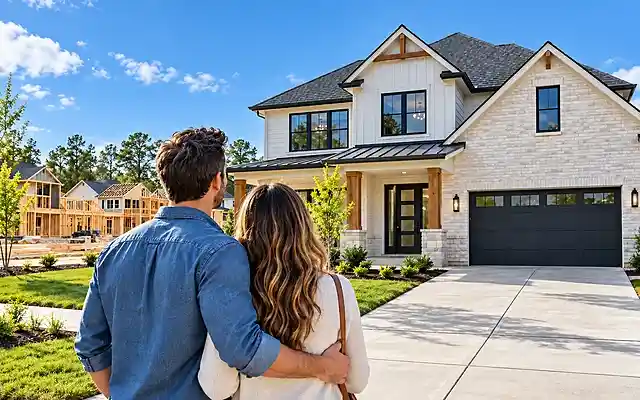
New construction homes offer opportunities to purchase a newly built property with modern layouts, recently installed systems, and, in some cases, choices involving finishes, floor plans, and features.
However, a newly built home is not automatically more affordable, better constructed, or easier to purchase than an existing property.
The decisions extend beyond choosing an attractive model home. Buyers need to understand what the advertised price includes, how different builders operate, whether upgrades provide lasting value, what happens when construction is delayed, and which protections apply when problems arise.
A finished inventory home may provide a relatively straightforward purchase opportunity. A home still under construction introduces additional uncertainty involving completion dates, design selections, inspections, financing arrangements, and contractual obligations.
The most important principle is to evaluate a new construction home as a complete financial and housing commitment, not simply as a newly built property with appealing features.
This comprehensive U.S. guide explains new construction home types, pricing, builder evaluation, incentives, financing considerations, contracts, construction timelines, inspections, warranties, energy performance, and long-term ownership costs.
It also explains how to compare new construction with existing homes and identify circumstances in which purchasing a newly built property may or may not make sense.
Construction practices, contract requirements, inspection procedures, financing conditions, warranties, and consumer protections vary by builder, property type, state, municipality, and loan program. Where legal or contractual requirements are relevant, verify the rules and documents applicable to your particular purchase.
For the chronological purchasing process, including detailed transaction decisions, see our Buying a New Construction Home guide. This evergreen resource focuses on the broader comparisons and considerations that help buyers evaluate new construction before making a long-term commitment.
New Construction Homes: Find the Guidance You Need
New construction involves several connected decisions. Understanding how those decisions influence one another can make it easier to compare properties and avoid focusing too heavily on a single feature, advertised price, or promotional offer.
Use the following guide to identify the subjects most relevant to your circumstances.
| Your main question | Relevant guidance | Important decision |
|---|---|---|
| What qualifies as new construction? | What Counts as a New Construction Home? | Whether the property is completed, under construction, or being built to order |
| Should I buy new or existing? | New Construction vs Existing Homes: Key Tradeoffs | Which housing option better fits your budget, timing, and priorities |
| What kinds of new homes are available? | Types of Newly Built Homes and Communities | Which property and ownership arrangement meets your needs |
| What will the home actually cost? | How New Construction Pricing Works | How the base price differs from your complete financial commitment |
| How do I assess the builder? | Evaluate Builders and Communities | Whether the builder and surrounding development meet your expectations |
| Are upgrades and incentives worthwhile? | Understand Floor Plans, Options and Upgrades; Compare Builder Incentives and Financing | Whether optional features and promotional offers provide real value |
| What happens if construction changes or takes longer? | Contracts, Deposits and Changes: What Buyers Should Watch; Build Timelines and Delays | Which obligations and risks you are accepting |
| How can I evaluate construction quality? | Inspections, Quality and Code Compliance | What inspections and documentation may help identify defects |
| What protection comes with the home? | Builder Warranties and Coverage Limits | What is covered, excluded, and required when making a claim |
| Will a newly built home cost less to operate? | New-Construction Energy Performance and Operating Costs | Whether documented performance justifies the expected expenses |
These considerations are interconnected. An inexpensive base price may become less attractive after upgrades and community charges.
A generous financing incentive may offer limited value if the loan is more expensive. A desirable floor plan may not overcome an unsuitable location or an uncertain construction schedule.
The goal is to understand the complete arrangement before making a binding commitment.
What Counts as a New Construction Home?
A new construction home is generally a newly built residential property that has not previously been used as an ordinary occupied home.
The term can describe several different purchase situations, from a completed property available for relatively prompt occupancy to a house that has not yet started construction.
A newly renovated existing home is not ordinarily the same as a newly constructed home, even if its appearance and interior finishes are substantially updated.
Understand completed inventory homes
An inventory home is a property a builder has constructed or is constructing for sale, rather than a house designed entirely around one particular buyer’s selections.
Some inventory homes are complete and available for comparatively prompt occupancy. Others are partially finished, with certain selections already made.
Potential advantages include being able to examine much of the actual property and having fewer unresolved decisions about materials and layouts.
However, a finished home may offer limited opportunities to alter the floor plan, finishes, or installed features.
An advertised completion or availability date should still be verified.
Understand speculative and move-in-ready homes
A speculative home, often called a spec home, is generally built without a specific buyer commissioning every aspect of its design.
Builders may choose the layout, site, materials, and finishes based on anticipated demand. A spec home may be under construction or completed.
A move-in-ready home generally describes a property that is substantially prepared for occupancy, although the precise meaning varies by seller and circumstances.
Do not assume that advertising language establishes the issuance of a certificate of occupancy, completion of outstanding work, or satisfaction of financing requirements.
Understand production and build-to-order homes
Production builders commonly use a collection of established floor plans and construction specifications across multiple properties or communities.
Buyers may select a plan and available options, subject to the builder’s rules and construction stage.
Build-to-order arrangements can provide choices involving finishes, rooms, elevations, and features, but those choices are usually limited by approved designs and available specifications.
The degree of customization varies considerably.
Understand semi-custom and custom homes
Semi-custom construction typically allows modifications within an established design framework. A custom home generally involves a more individualized design and construction arrangement.
Custom construction can create additional responsibilities involving design professionals, site conditions, contractor agreements, permits, financing, and project administration.
Purchasing a builder’s completed or planned home is different from independently managing construction on land you already own.
This guide addresses the consumer decisions associated with purchasing newly built housing. Owner-managed construction projects and contractor-led development on separately owned land involve additional specialized considerations.
New Construction vs Existing Homes: Key Tradeoffs
A new construction home and an existing home can meet similar housing needs, but their financial and practical characteristics may differ.
The relevant comparison is not simply new versus old. It is the specific newly built property compared with realistic alternatives in the same market.
Compare the major advantages and limitations
| Consideration | New construction home | Existing home |
|---|---|---|
| Availability | May be completed or require additional construction | Often available on a more established transaction schedule |
| Floor plans | May offer contemporary layouts and selected customization | Layout depends on existing design and alterations |
| Major systems | Recently installed, but quality and specifications vary | Age, condition, and maintenance history vary |
| Purchase pricing | May include premiums, options, and builder-specific incentives | May involve negotiation, repairs, or seller concessions |
| Neighborhood | May be developing or newly established | May offer mature landscaping and established services |
| Energy performance | May incorporate newer standards or certified features | Depends on existing equipment, upgrades, and condition |
| Inspections | Construction-stage access may be available | Typically evaluates an already completed property |
| Warranties | Builder coverage may apply, subject to terms | Coverage depends on the transaction and existing warranties |
| Outdoor areas | Landscaping and amenities may be incomplete | Improvements may already be established |
| Future expenses | New systems may need less immediate replacement, but defects are possible | Repairs and capital replacements depend on property condition |
This comparison identifies possibilities, not guaranteed outcomes.
A carefully maintained existing home may outperform a poorly constructed new property in durability or efficiency.
A completed inventory home may also be available sooner than an existing property involved in a complicated transaction.
Evaluate the total cost rather than the listing price
A newly built property may advertise a competitive starting price while carrying additional costs for the selected lot, upgraded finishes, appliances, landscaping, community fees, or other features.
An existing property may have a higher purchase price but include improvements the buyer would otherwise need to purchase separately. Alternatively, an existing property may require substantial repairs shortly after closing.
Compare the full financial requirements of both options, including anticipated maintenance and ownership expenses.
Consider location and neighborhood development
New subdivisions may provide updated infrastructure, planned amenities, and coordinated community layouts.
However, buyers should investigate whether roads, landscaping, parks, commercial facilities, and promised amenities are completed, funded, or merely proposed.
Continuing construction may also create noise, dust, traffic changes, and temporary access restrictions.
Established neighborhoods may offer more predictable surroundings, although existing infrastructure and local conditions deserve evaluation.
Avoid assuming that newer means better built
New construction can still contain workmanship defects, installation problems, moisture intrusion, drainage issues, or incomplete repairs.
A newly installed roof or heating system is not automatically free from defects.
Construction quality depends on design, materials, installation, oversight, site conditions, and maintenance.
Independent evaluation remains important regardless of a home’s age.
Types of Newly Built Homes and Communities
New construction is available in several property configurations and ownership arrangements.
The physical design of a home is only one consideration. Buyers should also understand who owns the land, what community restrictions apply, and which expenses continue after closing.
Compare common new construction property types
| Property type | Potential advantages | Important questions |
|---|---|---|
| Detached single-family home | Privacy, individual outdoor space, and layout choices | Lot ownership, maintenance, setbacks, and utility costs |
| Townhome | Efficient land use and potentially lower exterior-maintenance demands | Shared walls, association obligations, and exterior responsibility |
| Condominium | Shared facilities and potentially reduced individual maintenance | Association finances, insurance, ownership boundaries, and assessments |
| Infill development | Opportunity to purchase new housing in an established area | Lot limitations, neighboring construction, access, and zoning |
| Master-planned community | Coordinated amenities and community design | Development phases, association dues, infrastructure, and future assessments |
| Semi-custom or custom home | More individualized design possibilities | Contract complexity, costs, timeline, and construction responsibilities |
Property descriptions do not determine the legal ownership structure.
A townhouse may be owned through different legal arrangements. A property advertised as a detached home may still be subject to extensive community restrictions.
Verify the deed, governing documents, surveys, and other relevant records.
Understand homeowners association obligations
A homeowners association may maintain common areas, enforce community standards, manage amenities, or arrange particular services.
Before purchasing, examine applicable documents and request information about:
- Regular association assessments.
- Reserve funding and financial condition.
- Existing or anticipated special assessments.
- Maintenance responsibilities.
- Architectural and property-use restrictions.
- Amenity completion and operating costs.
- Builder control and any planned transition to homeowner governance.
- Applicable insurance arrangements.
Dues can increase, and planned facilities may require future expenditure. Do not assume an advertised initial association fee represents the long-term cost.
Examine future development phases
In a developing community, the surrounding environment may change after you move in. Additional homes, commercial buildings, roads, or community facilities may be constructed.
Review available development plans and distinguish approved improvements from preliminary proposals.
No development plan should be treated as a guarantee that every facility will be completed on a particular date.
How New Construction Pricing Works
Understanding the complete price of a newly built home is one of the most consequential parts of the decision.
A builder’s base price is generally a starting amount associated with a defined home plan and set of included specifications.
It is not automatically the final purchase price or the total amount the buyer will spend.
Understand the base price and standard specifications
A base price may reflect a particular floor plan, elevation, structural design, and collection of standard materials or features. However, each builder determines its own pricing structure.
One builder may include a particular homesite within the advertised amount. Another may add a separate lot premium.
Likewise, appliances, flooring, cabinets, landscaping, garage finishes, utility connections, and outdoor improvements may be included, optional, or excluded.
There is no universal list of items that every new construction base price includes.
Request the actual written specifications for the property rather than relying on model-home appearances or general advertising.
Identify expenses beyond the advertised price
| Cost category | What to verify |
|---|---|
| Base home price | Included plan, elevation, size, materials, and features |
| Homesite or lot premium | Whether land is included and whether a particular site costs more |
| Structural changes | Additional rooms, expanded spaces, garage changes, or layout modifications |
| Design selections | Flooring, countertops, cabinets, lighting, and fixtures |
| Appliances | Which appliances are included and their specifications |
| Site and exterior work | Grading, drainage, driveway, fencing, patios, and landscaping |
| Utility connections | Included services and any additional connection expenses |
| Community charges | HOA assessments, capital contributions, and applicable fees |
| Financing and closing | Loan charges, title services, insurance, taxes, and prepaid expenses |
| Post-closing purchases | Window coverings, furniture, storage, and other unfinished needs |
Some charges may be included in the contracted purchase price, while others are paid separately.
Confirm whether the builder’s advertised price applies to the actual property being considered.
Illustrative new construction price calculation
Consider a hypothetical home offered with a base price of $400,000.
| Price component | Illustrative amount |
|---|---|
| Base home price | $400,000 |
| Selected homesite premium | $16,000 |
| Structural options | $12,000 |
| Design upgrades | $19,500 |
| Additional exterior improvements | $7,500 |
| Illustrative contracted purchase price | $455,000 |
The total is: $400,000 + $16,000 + $12,000 + $19,500 + $7,500 = $455,000.
Suppose the buyer also expects $14,000 in purchase-related closing expenses and prepaid items before applying any eligible credits.
The combined illustrative purchase price and transaction expenses would be: $455,000 + $14,000 = $469,000.
This does not mean the buyer must bring $469,000 in cash to closing.
The amount financed, down payment, deposits already paid, lender or seller credits, loan-program requirements, and other adjustments determine the actual cash required.
These figures are hypothetical illustrations, not national construction prices or typical builder charges.
Calculate the monthly ownership commitment
The purchase price also does not establish the complete recurring expense of ownership.
A realistic budget should consider mortgage principal and interest, property taxes, homeowners insurance, applicable mortgage insurance, HOA assessments, utilities, maintenance, and reserves for unexpected expenses.
For example:
| Monthly expense | Hypothetical amount |
|---|---|
| Mortgage principal and interest | $2,700 |
| Property taxes | $500 |
| Homeowners insurance | $170 |
| HOA assessment | $100 |
| Maintenance and repair reserve | $220 |
| Illustrative monthly total | $3,690 |
This example assumes no separate mortgage insurance charge and excludes other potential expenses such as utilities, flood insurance, or additional assessments.
The maintenance reserve is a budgeting allowance, not a mandatory charge.
Actual mortgage payments and property expenses depend on the loan, property, jurisdiction, and ownership circumstances.
Investigate future property-tax assessments
A newly completed property may initially be assessed differently from the finished home that will eventually be taxed.
In some jurisdictions, early tax information may reflect undeveloped land, incomplete improvements, or a value that has not yet incorporated the completed construction.
That can make an initial tax estimate misleading.
Ask the local assessor how new construction is valued, when reassessment may occur, and which exemptions or classifications apply.
A lender’s escrow estimate should not be mistaken for a guarantee that future taxes will remain unchanged.
For broader affordability planning, the Consumer Financial Protection Bureau explains how to evaluate a home purchase budget.
Evaluate Builders and Communities
A builder’s marketing materials can help identify available products, but they should not substitute for independent evaluation.
Builder quality can vary between companies, developments, subcontractors, and individual homes.
A builder with an attractive model home or substantial advertising presence is not necessarily the strongest choice for every buyer.
Examine qualifications and operating history
Investigate the builder’s business identity and experience.
Where applicable, check contractor licensing, registration, disciplinary records, and complaint information through the appropriate state or local authority.
Licensing requirements differ by jurisdiction, and possession of a license does not guarantee construction quality.
Additional considerations include the builder’s completed developments, financial and operational continuity, customer support arrangements, and handling of reported defects.
Avoid relying exclusively on promotional rankings or a small number of online reviews.
Look beyond model-home finishes
Model homes may contain premium upgrades that are not included in the base offering.
Some features may be staged, supplemented, or installed specifically for display.
When comparing a model home with a proposed purchase, establish which features are standard, optional, unavailable, or unique to the model.
Request an itemized specification rather than assuming visible materials will be included.
Investigate completed communities
When possible, examine comparable completed homes and established communities developed by the builder.
Useful observations may include exterior durability, landscaping quality, drainage, public-area maintenance, and how completed streets and amenities compare with initial representations.
Individual homeowner experiences can be informative, but they should not be treated as conclusive evidence about every property.
Evaluate community infrastructure
A new neighborhood’s appeal depends partly on infrastructure and surrounding services.
Investigate road access, drainage, utilities, internet availability, emergency access, parking, planned development, and the status of any advertised amenities.
Ask who will own and maintain roads, stormwater facilities, landscaped common areas, and community infrastructure.
Future maintenance obligations may fall on local government, an association, another entity, or a combination of parties.
These arrangements can affect both costs and long-term property use.
Consider environmental and property risks
New construction does not eliminate risks involving flooding, drainage, soil conditions, radon, or other location-dependent concerns.
Evaluate available flood-risk information, local drainage conditions, applicable property disclosures, and relevant environmental considerations.
The U.S. Environmental Protection Agency recommends asking whether a newly built home includes radon-resistant features and whether the property has been tested. Its guidance for buyers of newly built homes explains why new construction should not be assumed free of radon.
Where a concern is material, consider qualified professional advice or appropriate testing.
Understand Floor Plans, Options and Upgrades
Customization can make new construction attractive, but the opportunity to choose finishes should not overshadow practical needs.
The most useful selections are those that improve how the household uses the property while remaining consistent with the overall budget.
Distinguish structural choices from cosmetic upgrades
Structural selections may include room configurations, extensions, ceiling changes, or other alterations that affect the building’s design.
Cosmetic or finish selections may involve cabinets, countertops, flooring, paint, lighting, and fixtures.
Some selections can be difficult or costly to modify after construction. Others may be comparatively straightforward to replace later.
The distinction matters because a builder’s upgrade price may not reflect the cost or practicality of doing the work after occupancy.
Prioritize functionality over display features
Before choosing upgrades, consider:
- Whether the floor plan supports everyday activities.
- Accessibility and changing household needs.
- Storage and usable living space.
- Kitchen and bathroom functionality.
- Natural light and privacy.
- Heating and cooling distribution.
- Electrical outlets and network connections.
- Maintenance requirements.
- Long-term affordability.
A high-end finish may be less valuable to your household than an additional storage area, a more functional layout, or a design that accommodates future mobility needs.
Compare upgrades with post-closing alternatives
Some features may be available from the builder or an independent contractor after closing.
Compare both approaches carefully.
Builder-installed upgrades may offer installation convenience and integrated construction planning. However, they may carry premiums or limit product choices.
Post-closing work may provide greater flexibility but can introduce additional scheduling, permitting, installation, financing, or warranty considerations.
The lowest quoted price is not automatically the lowest total cost.
Avoid assuming every upgrade increases resale value
An upgrade’s personal usefulness and its future market value are different considerations. Highly customized finishes may appeal strongly to one buyer but less to another.
Some expensive changes may provide limited additional value when a future purchaser compares similar properties.
Make discretionary selections primarily because they suit your needs and finances, not because you expect a guaranteed return at resale.
Keep a separate upgrade allowance
Set a maximum amount for optional features before visiting a design center. Ask for written prices and identify which selections are refundable, changeable, or final.
Record how each upgrade affects the contracted purchase price, financing assumptions, and estimated cash requirement.
A disciplined allowance reduces the risk of approving multiple individually manageable selections that become expensive when combined.
Compare Builder Incentives and Financing
Builders may offer promotional arrangements involving purchase-price reductions, closing-cost contributions, upgrades, temporary mortgage payment assistance, or financing through a preferred lender.
These offers can be valuable, but their real benefit depends on the complete transaction. The largest advertised incentive is not necessarily the offer with the lowest overall cost.
Understand common builder incentives
| Incentive | Potential benefit | Important limitation |
|---|---|---|
| Purchase-price reduction | Lowers the agreed purchase price | Availability and negotiation terms vary |
| Closing-cost contribution | May reduce eligible cash expenses at closing | Loan-program limits and allowable uses may apply |
| Upgrade allowance | Can reduce the cost of selected features | May not translate into equivalent cash or resale value |
| Temporary rate buydown | Reduces specified early mortgage payments | Payments generally increase when temporary assistance ends |
| Permanent rate buydown | May lower the interest rate over the applicable loan period | Costs, qualifying terms, and alternatives must be compared |
| Preferred-lender incentive | May combine financing and builder benefits | May depend on using a particular lender or loan product |
Some promotions have deadlines, eligibility restrictions, or conditions involving the property, loan, or closing date. Obtain the offer’s written terms.
Distinguish temporary and permanent mortgage benefits
A temporary buydown is different from permanently obtaining a lower mortgage interest rate.
Temporary assistance generally reduces payments for a limited introductory period. The payment can rise as that assistance expires, even when the underlying mortgage rate is fixed.
A permanent rate reduction generally involves a different interest-rate structure, potentially obtained through points or another pricing arrangement.
The CFPB explains that a temporary mortgage buydown can cause payments to rise after the initial reduced-payment period.
Assess whether the payment remains affordable after every temporary benefit ends. Do not use an introductory payment alone to determine affordability.
Compare the builder’s lender with independent lenders
A builder may have an affiliated or preferred mortgage lender. That relationship does not automatically make the lender the least expensive or most suitable option.
For many home purchases, buyers can compare alternatives instead of accepting a preferred lender solely because of the builder’s recommendation.
The CFPB’s guidance on purchasing a home specifically addresses builder deposits and the ability to shop for financing.
Compare available offers using equivalent loan amounts, terms, down payments, points, and other assumptions.
Ask each lender to clarify how builder credits or other promotional arrangements affect the transaction.
Use Loan Estimates to examine the actual financing terms
A Loan Estimate provides standardized information for comparing many mortgage offers.
Review:
- Loan amount and repayment term.
- Interest rate and annual percentage rate.
- Discount points and lender credits.
- Origination and other loan charges.
- Mortgage insurance when applicable.
- Estimated taxes and insurance.
- Projected monthly payment.
- Estimated cash required at closing.
- Rate-lock conditions and expiration.
- Any relevant changes that may arise if construction is delayed.
The CFPB’s Loan Estimate comparison guidance explains how to compare upfront charges and borrowing costs.
The comparison should reflect the same loan structure and reasonably comparable assumptions.
A loan with lower initial closing expenses may cost more over time. A loan with a lower rate may require additional upfront expense.
Evaluate incentives over your expected ownership period
An offer that is attractive over two years may not be the best option over ten years.
Consider how long you expect to keep the mortgage, whether refinancing is likely, and how much cash must remain available after closing.
For example, a $10,000 builder contribution may appear valuable. But the benefit cannot be evaluated fairly without considering the purchase price, eligible use of the credit, mortgage rate, lender fees, and competing offers.
The contribution’s advertised amount is not proof of $10,000 in net financial savings relative to every alternative.
Compare the actual economic consequences, not just the headline promotion.
For broader financing guidance, consult our Mortgage Financing resource.
Contracts, Deposits and Changes: What Buyers Should Watch
New construction contracts may differ substantially from the agreements buyers encounter in ordinary resale transactions.
A builder may use forms designed around its development, scheduling, specification, and construction practices. The document may establish important obligations before the property is finished.
Because legal requirements and enforceability vary, consider obtaining independent advice from a qualified real estate attorney familiar with the relevant jurisdiction.
Understand builder deposits and refund conditions
Builders may request deposits or earnest money before construction is completed.
The amount, handling, refund conditions, and consequences of cancellation depend on the agreement and applicable law.
Before paying, establish:
- Who receives and holds the funds.
- Whether deposits are refundable.
- Which events allow cancellation.
- Whether financing or appraisal problems affect refund rights.
- How change orders affect the deposit.
- What happens if the builder does not perform.
- When funds will be credited toward the purchase.
A deposit should not be presumed refundable simply because the buyer changes plans.
Examine specifications and substitutions
A contract may permit substitutions when particular materials become unavailable or specifications change.
Determine what substitutions are allowed, whether the builder must give notice, and whether the buyer has approval rights.
A replacement product should not be assumed equivalent merely because it serves a similar function. Material specifications, performance, appearance, and warranty coverage may differ.
Review completion and delay provisions
Some agreements distinguish estimated completion dates from binding deadlines.
They may also address weather, labor availability, permits, inspections, material shortages, and events beyond the builder’s control.
Determine what contractual remedies exist when completion is delayed and what documentation is required to exercise them.
Do not assume that a projected move-in date is an enforceable promise.
Evaluate financing, appraisal and inspection protections
A contract can determine whether the buyer has meaningful protections if financing becomes unavailable, the appraisal is insufficient, or the property fails to meet expected standards.
The CFPB notes the importance of understanding financing and inspection contingencies when choosing a home.
Builder agreements may contain different provisions from standard resale contracts.
Review the actual language rather than assuming protections will apply automatically.
Keep changes documented
Design changes, upgrades, promised repairs, and revised delivery arrangements should be documented through the appropriate written process.
A useful record identifies the agreed modification, price effect, schedule effect, responsible party, and approval.
Avoid relying solely on verbal representations by a sales representative when the written agreement governs the transaction.
For the fuller purchasing sequence, consult our Buying a New Construction Home guide.
Build Timelines and Delays
Construction timing affects housing arrangements, financing, moving plans, and financial reserves.
There is no single national completion period that reliably applies to every newly built home.
The timeline depends on the project’s stage, property design, builder capacity, local permits, weather, labor, materials, site conditions, and required inspections.
Understand the difference between completed and unfinished homes
A completed inventory property generally offers more certainty about its physical condition and immediate availability.
A property under construction may still require systems installation, finishes, inspections, or final approvals.
A build-to-order home may involve additional design and construction stages.
Ask which work is complete and which items remain outstanding. Photographs, construction updates, and projected dates should be evaluated in context.
Identify common sources of delays
Potential sources of delay include:
- Permit or inspection scheduling.
- Adverse weather.
- Site or drainage conditions.
- Material shortages or substitutions.
- Labor and subcontractor availability.
- Buyer-requested changes.
- Utility connections.
- Failed inspections or required corrections.
- Unfinished community infrastructure.
A delay does not necessarily indicate poor construction management, but repeated unexplained delays can justify closer investigation.
Budget for overlapping housing expenses
A purchaser waiting for completion may need to extend a lease, arrange temporary accommodation, store belongings, or reschedule movers.
Other potential expenses include rate-lock extensions, travel, and changes to financing assumptions.
Before relying on a projected completion date, determine how much financial flexibility is available if occupancy moves later than expected.
If selling an existing property, consider the risks of coordinating two transactions around a construction schedule that may change.
Clarify what counts as completion
Substantial completion, final inspection approval, issuance of a certificate of occupancy, and completion of every cosmetic item are not necessarily identical milestones.
Their relevance depends on local requirements and contractual terms.
Ask what must be finished before closing or occupancy and how unfinished items will be addressed.
A punch list may document incomplete work, but it should not be treated as a substitute for required safety, code, or occupancy approvals.
Inspections, Quality and Code Compliance
A newly constructed property deserves careful inspection even when it has passed required municipal reviews.
Building-code inspections and private home inspections may examine different matters.
Neither should be assumed to identify every possible problem.
Understand municipal construction inspections
Local authorities may inspect particular stages of construction to determine compliance with applicable requirements.
The process varies by jurisdiction and project type.
Municipal approvals do not necessarily establish that every finish, installation, or concealed component meets a buyer’s expectations.
They also do not guarantee the absence of future defects.
Consider independent professional inspections
A qualified independent inspector may help identify visible defects, installation concerns, or conditions requiring further evaluation.
Whether an inspector can access the property during construction depends on site rules, safety considerations, the contract, and applicable law.
Potential inspection opportunities include:
| Construction stage | Potential inspection focus | Important limitation |
|---|---|---|
| Foundation or early construction | Accessible foundation, site, and drainage conditions | Some components may be concealed or inaccessible |
| Before drywall installation | Visible framing, wiring, plumbing, and mechanical work | Access depends on construction stage and permission |
| Near completion | Installed systems, visible finishes, safety features, and accessible components | Testing conditions and scope vary |
| Before warranty periods expire | Developing defects and unresolved items | Warranty terms and reporting deadlines control |
Not every property will permit every inspection opportunity.
Discuss scope, licensing or qualification requirements, access, and scheduling with the appropriate professionals.
Evaluate issues involving moisture and drainage
Water intrusion can affect both new and older buildings.
Consider grading, gutters, downspouts, basement or crawlspace conditions, visible plumbing, and drainage away from the structure.
A dry appearance during a brief visit does not establish that a property has no moisture problem. Where concerns are significant, request appropriate investigation and written correction commitments.
Do not confuse inspection findings with warranty coverage
An inspector may identify a defect that the builder disputes or that a warranty excludes.
Likewise, warranty coverage may apply to an issue that was not visible during an earlier inspection. Inspection services and contractual warranties serve different purposes.
Document material findings, obtain relevant professional evaluations, and understand the procedures available under the agreement and applicable law.
For additional information about the broader transaction, see our Inspection, Appraisal and Closing resource.
Builder Warranties and Coverage Limits
Builder warranties are an important feature of many newly built homes, but buyers should not assume that all warranties provide identical protection.
A warranty is meaningful only when its coverage, duration, exclusions, claims procedures, and remedies are understood.
Understand what a builder warranty may cover
A builder warranty may address certain defects in workmanship, materials, installed systems, or structural components.
Coverage usually depends on the specific agreement.
The Federal Trade Commission explains the distinction between builder warranties, third-party coverage, and service contracts in its Warranties for New Homes guidance.
Ask for the actual warranty documents before making a final purchase commitment.
Understand the common 1-2-10 warranty format
Some builder warranty programs use a structure resembling:
| Illustrative coverage period | Commonly associated coverage | Important qualification |
|---|---|---|
| One year | Certain workmanship and material defects | Covered items and exclusions vary |
| Two years | Certain plumbing, electrical, or mechanical systems | Coverage and start dates depend on the warranty |
| Ten years | Specified major structural defects | Definitions and remedies may be narrow |
A 1-2-10 structure is an example, not a universal warranty requirement or a promise that every new home receives those coverage periods.
Some programs use different durations, exclusions, administrators, or definitions.
The presence of a warranty should not be interpreted as evidence that every defect will be corrected without cost or disagreement.
Identify the warranty provider
Coverage may be administered directly by the builder or through an independent warranty organization.
Different entities may be responsible for particular categories of defects.
Understand who receives claims, who determines coverage, and who performs repairs.
Consider what happens if the builder changes ownership or ceases operating.
Review important exclusions
Potential exclusions can involve ordinary wear, cosmetic settlement cracks, improper maintenance, owner modifications, consequential expenses, or damage arising from excluded events.
Manufacturer warranties on appliances and other products may operate separately from a builder’s construction warranty.
Service contracts sold as home warranties may also be different from the warranty accompanying a newly built property.
Do not treat these protections as interchangeable.
Understand the claims process
Important questions include:
- When does each coverage period begin?
- How must a defect be reported?
- Are written notices required?
- What deadlines apply?
- Who decides whether a defect is covered?
- Is repair, replacement, reimbursement, or another remedy available?
- Are mediation or arbitration provisions included?
- What records should the owner retain?
Document problems with dates, photographs, descriptions, and correspondence.
The FTC recommends examining warranty procedures and maintaining written records when pursuing covered repairs.
Understand that statutory rights may be separate
State law may provide obligations or remedies that differ from the builder’s written warranty.
The availability and scope of implied warranties, construction-defect claims, notice procedures, and limitation periods vary by jurisdiction.
A written warranty should not be assumed to describe every possible legal right.
Obtain qualified local legal guidance when a serious defect, denial, or contractual dispute arises.
New-Construction Energy Performance and Operating Costs
New construction may provide opportunities for efficient insulation, windows, heating and cooling systems, air sealing, and other modern building features.
However, the age of a home alone does not prove superior performance or lower utility bills.
Climate, building design, installation quality, equipment specifications, household behavior, and local utility rates affect actual operating costs.
Ask for documented energy features
Rather than accepting general claims about an energy-efficient home, request specific information.
Useful details may include:
- Insulation specifications.
- Window performance ratings.
- Heating and cooling equipment efficiency.
- Air-sealing measures.
- Ventilation systems.
- Water-heating equipment.
- Applicable energy-code requirements.
- Any third-party energy certification.
- Testing reports where available.
The features should be evaluated together because a home’s energy performance depends on how systems and building components interact.
Understand energy certification
A builder may advertise ENERGY STAR or another energy-performance designation.
Ask whether the specific property has received the claimed certification, rather than assuming participation in a builder program means every home is certified.
The EPA’s ENERGY STAR program explains that certified new homes undergo independent inspections and testing under applicable program requirements.
The Department of Energy also maintains information about its DOE Efficient New Homes program, which addresses qualified high-performance housing.
Certifications have defined requirements, eligibility conditions, and verification processes. An advertised label should be checked against the particular property and current program criteria.
Evaluate more than energy bills
Operating expenses also include insurance, maintenance, landscaping, association charges, utilities, and eventual equipment replacement.
A newly installed system may reduce the likelihood of an immediate age-related replacement, but it still requires maintenance and can fail unexpectedly.
Consider the full ownership budget rather than assuming a new home will have minimal expenses for its first several years.
Consider indoor air quality and comfort
New homes can experience indoor air quality concerns involving ventilation, moisture, construction materials, combustion sources, or radon.
Ask about ventilation arrangements, moisture control, and relevant testing.
New construction should not be treated as automatically healthier than existing housing.
A property’s actual specifications, condition, and testing results provide stronger evidence than promotional language.
Who New Construction May or May Not Suit
A new construction property can be appropriate for many different households, but the advantages depend on individual circumstances.
The strongest decision is usually based on practical needs, total costs, acceptable uncertainty, and anticipated ownership duration.
Match the property to your priorities
| Buyer situation | Potential advantage | Important concern |
|---|---|---|
| Buyer seeking a specific layout | Access to established or customizable new floor plans | Modification limits and upgrade costs |
| Household wanting newer systems | Recently installed major components | Installation quality and warranty exclusions |
| Buyer needing a quick move | Completed inventory may be available | Actual occupancy readiness must be confirmed |
| Buyer expecting to customize | Some properties offer design choices | Costs, deadlines, and available selections |
| Household with a strict budget | Some builders offer promotional arrangements | Final price, financing costs, and future assessments |
| Buyer considering a developing neighborhood | New community facilities and housing options | Continuing construction and incomplete infrastructure |
| Buyer with uncertain relocation timing | Completed inventory may offer clearer scheduling | Unfinished construction can create delay risk |
| Long-term homeowner | Opportunity to select suitable features and layout | Maintenance, taxes, community rules, and resale considerations |
This framework identifies relevant tradeoffs without suggesting that one housing choice is universally superior.
Recognize when an existing home may be preferable
An existing property may deserve greater consideration when location, established neighborhood character, mature landscaping, immediate usability, or particular architectural features are priorities.
It may also be preferable when a buyer finds a well-maintained home whose total cost compares favorably with available new construction.
The appropriate comparison must be based on actual local properties.
Recognize when waiting may be appropriate
A buyer may benefit from delaying a commitment when the complete price is unclear, deposit terms are unacceptable, financing remains uncertain, or significant questions about construction quality or community obligations have not been resolved.
Waiting can have costs and risks of its own, including changing prices or availability.
Nevertheless, pressure to act quickly should not replace careful evaluation of material financial and contractual obligations.
Frequently Asked Questions About New Construction Homes
Is it worth buying a new construction home?
It can be worthwhile when the property’s total cost, location, layout, quality, warranties, and ownership expenses fit your needs. A newly built home is not automatically a better investment or living arrangement than an existing property. Compare realistic local alternatives and evaluate the full financial commitment.
Are new construction homes cheaper than existing homes?
Not necessarily. Relative prices depend on the market, property characteristics, builder incentives, location, and included features. A lower advertised base price can become more expensive after lot premiums, upgrades, and additional charges. Compare completed, reasonably equivalent properties rather than relying on general price assumptions.
What is included in the base price of a new construction home?
A base price generally corresponds to a defined floor plan and set of standard specifications. Land, lot premiums, appliances, landscaping, utilities, upgrades, and other features may be included or priced separately. Request the specific builder’s written inclusions and exclusions for the actual property.
What is the difference between a spec home and a custom home?
A spec home is typically designed and built based on a builder’s anticipated market demand, with many selections made before a buyer commits. A custom home generally allows more individualized design choices. The exact level of customization, financing structure, and construction responsibility depends on the arrangement.
Can you negotiate the price of a new construction home?
Negotiation may be possible, but builder policies and market conditions vary. A builder might offer a price adjustment, upgrades, closing-cost assistance, or financing incentives. Evaluate each proposal using its written terms and complete economic effect rather than assuming all incentives are equivalent.
Are builder incentives worth it?
Some offers provide meaningful value, while others may be offset by higher financing costs, purchase prices, or restrictions. Compare standardized mortgage offers, the cash required at closing, future payments, and expected borrowing costs. An advertised credit alone does not establish net savings.
Do I have to use the builder’s preferred lender?
In many ordinary mortgage transactions, buyers may shop among lenders. Particular incentive eligibility may depend on using a preferred lender, and the financing arrangement should be reviewed carefully. Compare available loan options and obtain qualified advice about any contractual or program-specific restrictions.
Can new construction homes have defects?
Yes. Newly built properties can have workmanship, installation, drainage, structural, or systems problems. Municipal inspections, builder quality-control procedures, and warranties do not guarantee that every defect will be discovered or corrected. Independent evaluation and documentation can provide additional protection.
Should I get a home inspection on new construction?
An independent inspection can help identify visible issues that might otherwise go unnoticed. The appropriate scope and timing depend on the property’s construction stage, site-access arrangements, and applicable requirements. Consider discussing available inspection opportunities with a qualified inspector before making contractual commitments.
What does a new construction home warranty cover?
Coverage varies by builder and warranty program. Some warranties address workmanship, materials, building systems, or defined structural defects for different periods. Exclusions, claim procedures, and remedies can substantially limit coverage. Read the actual documents rather than assuming every new home has a particular warranty package.
How long does it take to build a new construction home?
There is no single reliable construction duration for every property. Timing depends on the project type, construction stage, permits, labor, weather, materials, design changes, inspections, and other conditions. A completed inventory home may be available sooner than a build-to-order property. Verify the contractual significance of any projected completion date.
Are new construction homes more energy-efficient?
Some newly built homes incorporate improved insulation, equipment, and energy-performance features, but efficiency varies. A new property does not automatically outperform a well-upgraded existing home. Look for documented specifications, appropriate testing, and verified certifications rather than relying on age alone.
Explore Detailed New-Construction and Homebuying Resources
This evergreen hub provides the broader decision-making framework for evaluating newly built housing.
Some questions require deeper treatment than is appropriate in a general overview.
The following Real Estate Crafts resources provide more specialized guidance.
- Buying a New Construction Home: What Buyers Need to Know: The primary specialist resource for understanding the chronological new-construction purchasing journey, transaction decisions, builder-related procedures, inspections, contracts, and closing considerations.
- Buying a Home: Plan, Choose, Finance & Close: A broader homebuying resource for evaluating financial readiness, housing choices, mortgage decisions, and the responsibilities involved in purchasing property.
- Mortgage Financing: Loan Types, Rates & Costs: Guidance on comparing mortgage products, interest rates, borrowing expenses, loan terms, and other financing considerations.
- Inspection, Appraisal & Closing: Homebuyer’s Guide: A resource covering property evaluation, appraisal considerations, and key closing-related issues.
- Homeownership: Costs, Benefits & Responsibilities: A broader examination of ownership expenses, ongoing responsibilities, financial decisions, and long-term property management.
Additional subjects, including detailed builder warranty claims, construction-stage inspections, new-home price breakdowns, incentive comparisons, and specialized construction financing, may warrant separate articles as new research and reader needs justify them.
Those topics can be developed independently while this page remains the central New Construction resource.
Make a Confident New-Construction Decision
New construction homes can offer appealing opportunities, from contemporary floor plans and recently installed systems to builder-selected or buyer-selected features.
But the benefits should be evaluated alongside the risks.
An attractive model home does not establish the complete purchase price. A promotional financing offer does not guarantee the lowest borrowing cost. A projected completion date does not eliminate construction uncertainty. A builder warranty does not replace careful property evaluation.
Before committing to a newly built home, return to six essential questions:
- Do I understand exactly what is included in the property and its contracted purchase price?
- Have I evaluated the builder, community, ownership arrangement, and surrounding development?
- Can I afford the complete monthly and long-term costs, including taxes, insurance, maintenance, and community charges?
- Have I compared financing and builder incentives based on their actual economic value?
- Do I understand the construction schedule, contract provisions, inspections, and warranty limitations?
- Does this specific home meet my needs more effectively than the realistic alternatives available to me?
Clear answers will help you make a more informed decision without depending on promotional claims or assumptions about newly built housing.
The right new construction home is not necessarily the one with the most upgrades, the largest advertised discount, or the newest-looking design. It is the property whose location, quality, contractual terms, total costs, and long-term suitability align with your financial circumstances and housing goals.