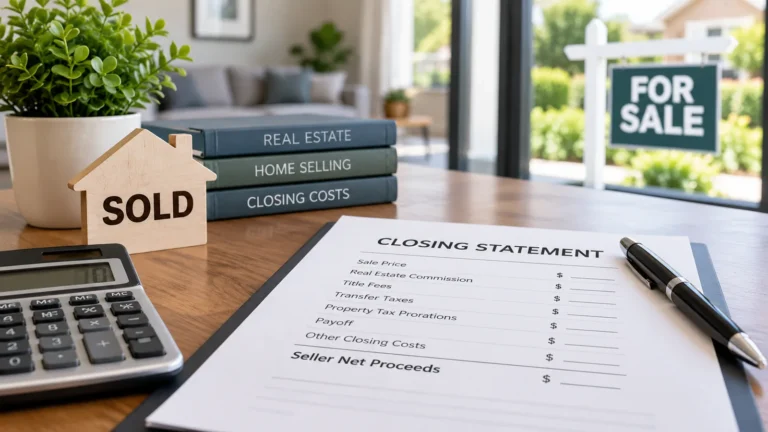
How to Sell a House As Is: What It Means and How It Works
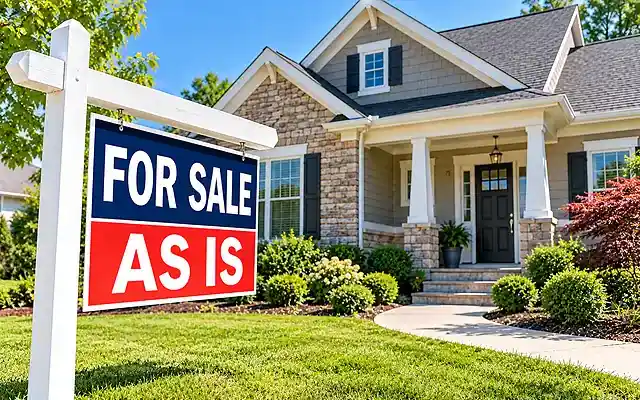
If you’re searching for how to sell house as is, the key is understanding what an as-is sale changes and what responsibilities still remain.
Selling a house as is can save you from completing a long list of repairs or renovations before putting the property on the market. But an as-is sale does not mean you can simply hand over the keys without considering the home’s condition, disclosure requirements, buyer inspections, financing, pricing, or the terms of the purchase contract.
In practical terms, selling as is usually means offering the property in its current condition and making clear that you do not intend to complete some or all requested repairs before closing.
That can be useful when a home needs substantial work, you have limited time or money for improvements, or the cost and uncertainty of renovating do not fit your situation. It can also affect the buyers who are interested, the offers you receive, and the issues that must be resolved before the transaction can close.
Understanding those tradeoffs can help you decide whether selling as is makes sense and how to approach the sale without confusing “as is” with “no responsibilities.”
What Does It Mean to Sell a House As Is?
To sell a house as is generally means offering the property in its existing condition rather than promising to repair or improve it before the buyer takes ownership.
The buyer is being asked to evaluate the property based on its current condition and decide whether the price and terms justify taking on the work that may be needed.
For example, an as-is house might have:
- an aging roof;
- outdated plumbing or electrical components;
- worn flooring;
- old appliances;
- damaged siding;
- an older heating or cooling system;
- cosmetic deterioration;
- deferred maintenance; or
- several projects the seller does not want to complete before moving.
The phrase can also be used when a property is generally functional but the seller simply does not want to renovate it for the market.
That distinction matters. A house does not have to be severely distressed to be sold as is.
Selling as is is therefore better understood as a position on property condition and repairs, not as a separate type of real estate transaction.
The home still needs to be marketed, an offer still needs to be accepted, the parties still enter into a contract, and the transaction still has to satisfy whatever contractual, legal, title, financing, and closing requirements apply.
For the broader sequence surrounding those steps, see our guide to how to sell a house.
What Selling As Is Does Not Mean
The phrase “as is” is easy to misunderstand.
It does not automatically mean:
- the seller can conceal known problems;
- the buyer cannot inspect the property;
- every buyer must accept every defect discovered after making an offer;
- the seller can never agree to a repair or credit;
- the property will qualify for every type of financing;
- the buyer cannot negotiate;
- the home has no value;
- only cash buyers can purchase it; or
- every as-is contract works the same way.
The actual consequences depend on the purchase agreement, applicable law, the property’s condition, the buyer’s financing, and other facts surrounding the transaction.
A seller can also take a selective approach. You might decide not to replace an old kitchen, refinish worn floors, or renovate bathrooms, but still correct a leaking pipe or another problem that would otherwise interfere with the sale.
In other words, “as is” does not have to mean “do absolutely nothing.”
The more useful question is: What condition are you willing to sell the property in, and what obligations could still apply even if you do not plan to make improvements?
Can You Legally Sell a House As Is?
In general, homes can be offered for sale in their existing condition. The more complicated issue is what an as-is provision does and does not change in the jurisdiction where the property is located.
Real estate disclosure requirements vary across the United States. State and sometimes local rules can affect what information must be provided, how disclosures are made, and what remedies may exist if required information is withheld or misrepresented.
The purchase contract matters too. An as-is provision can establish expectations about the property’s condition and the seller’s repair position, but it should not be treated as a universal waiver of every legal, contractual, or disclosure responsibility.
If you are uncertain about the effect of an as-is provision, disclosure requirement, or contract term in your state, consider obtaining guidance from an appropriate real estate professional or attorney familiar with the jurisdiction and transaction.
Do You Have to Disclose Problems When Selling As Is?
Selling as is should not be treated as permission to hide known property problems.
What a seller must disclose depends substantially on the law that applies to the property and transaction. States do not all use the same disclosure framework, so a nationwide article cannot provide one universal checklist that applies to every seller.
Depending on the jurisdiction and circumstances, relevant issues can include known defects or conditions involving areas such as:
- water intrusion;
- structural problems;
- roofing;
- plumbing;
- electrical systems;
- environmental conditions;
- property boundaries;
- additions or alterations;
- pest damage; or
- other material property conditions.
The important distinction is between declining to repair a condition and failing to provide information that must be disclosed. Those are not the same thing.
A seller may be able to say, in effect, “I am selling the property in its present condition and do not intend to correct this problem.” That does not necessarily answer the separate question of whether information about the problem must be provided to the buyer.
Federal Lead-Based Paint Requirements
For most housing built before 1978 that is covered by the federal Lead-Based Paint Disclosure Rule, sellers must disclose specified known information about lead-based paint and lead-based paint hazards, provide available related records or reports, give buyers the required lead-hazard information pamphlet, and include the required warning and acknowledgment language.
Buyers generally must also receive a 10-day opportunity to conduct a lead inspection or risk assessment, although the parties can agree to a different period.
The federal disclosure rule does not require the seller to conduct or finance that inspection or risk assessment.
An as-is label does not erase applicable federal disclosure requirements.
Can Buyers Still Get a Home Inspection?
Yes, an as-is sale does not inherently prevent a buyer from inspecting the property.
Whether a particular buyer has an inspection contingency, due-diligence period, termination right, repair-request mechanism, or other protection depends on the contract and applicable law.
This creates an important distinction: An inspection can identify problems without obligating the seller to repair every problem.
A buyer may want an inspection precisely because the property is being sold as is. The buyer needs enough information to decide whether the home’s condition and expected repair costs are acceptable.
A professional inspection can evaluate visible and accessible components of the property, but an inspection is not a guarantee that every defect will be found.
Our home inspection checklist for buyers explains the inspection process and the major areas buyers commonly evaluate.
From the seller’s perspective, inspection findings can lead to several possible outcomes depending on the contract.
The buyer might:
- proceed without requesting changes;
- seek additional specialist evaluations;
- attempt to renegotiate;
- request a credit or price adjustment;
- request a repair despite the as-is positioning; or
- exercise a contractual right to terminate, if one exists.
The seller may be free to reject a repair request in an as-is transaction, but that does not necessarily mean the buyer must continue with the purchase. The contract determines much of what happens next.
Can a Buyer Get a Mortgage on an As-Is House?
An as-is house does not automatically require a cash buyer. Some buyers can finance an as-is purchase, but the property’s condition and the requirements associated with the particular mortgage can affect whether financing succeeds.
This is where the seller’s repair position and the lender’s property requirements can collide. A seller may make clear that they do not plan to make repairs, and a buyer may initially accept that position.
But if an appraisal or other lending requirement identifies a condition that must be addressed for the property or loan to qualify, the parties may have a new decision to make.
Depending on the circumstances, they might:
- resolve the condition;
- renegotiate;
- use a different financing structure if available;
- seek another solution acceptable to the relevant parties; or
- fail to complete the transaction.
Minor deferred maintenance is not necessarily treated the same as a condition affecting safety, soundness, structural integrity, or property eligibility.
That is one reason sellers should avoid assuming that “as is” means the buyer’s lender will ignore property condition.
An appraisal also serves a different purpose from a home inspection. For a deeper explanation of valuation and lender-related appraisal issues, see our guide to the home appraisal.
When Does Selling a House As Is Make Sense?
Selling as is can make sense when avoiding repairs provides more value to you than completing the work before listing.
That can occur for many reasons.
You Do Not Have the Cash for Major Repairs
A property may need work that would require substantial upfront spending.
If you cannot comfortably fund those repairs, an as-is sale can allow you to market the property without first taking on additional financial pressure.
You Need a Simpler Sale Preparation Process
Repairs and renovations take time. You may need to obtain estimates, hire contractors, select materials, supervise work, handle delays, and deal with unexpected problems uncovered during construction.
Selling as is can reduce that pre-listing workload.
The Property Needs Extensive Work
When a house needs multiple major projects, repairing everything before selling may not be practical.
The question becomes whether the likely improvement in sale proceeds justifies the money, time, risk, and effort required.
You Do Not Want to Manage Renovations
Even if you can afford the work, you may not want to become the project manager for a renovation immediately before moving.
That preference has value too.
You Are Uncertain Whether Buyers Will Value the Improvements
Not every dollar spent before a sale produces an equal increase in sale price.
Some repairs protect marketability or remove obvious obstacles. Other improvements are largely matters of taste.
A seller can spend heavily on finishes that a future buyer would have chosen differently.
Speed Matters to Your Situation
Avoiding a lengthy repair schedule may allow you to bring the property to market sooner.
But selling as is should not be presented as a guarantee of a fast closing. Marketing time still depends on factors such as price, condition, buyer demand, financing, location, and transaction execution.
Pros and Cons of Selling a House As Is
An as-is strategy can simplify one part of the sale while creating tradeoffs elsewhere.
| Potential advantages | Potential disadvantages |
|---|---|
| Less pre-listing repair work | Some buyers may be discouraged by the condition |
| Lower upfront renovation spending | Offers may reflect expected repair costs and risk |
| Potentially faster path to listing | Financing may be more difficult for some properties |
| Less contractor and project-management burden | Buyers may investigate the property more cautiously |
| Can transfer future improvement decisions to the buyer | Serious defects can narrow the buyer pool |
| Useful when renovations do not fit the seller’s circumstances | Pricing can be more difficult when condition varies substantially from comparable homes |
These are possibilities, not guarantees.
For example, selling as is does not automatically mean accepting a low price. Likewise, completing repairs does not guarantee that you will recover everything you spend.
The relevant comparison is the overall outcome of each realistic strategy, not the label attached to the sale.
How to Sell House As Is Step by Step
Selling as is works best when it is treated as a deliberate selling strategy rather than simply avoiding repairs.
1. Understand the Property’s Current Condition
Start by identifying what you already know about the home. Consider the age and apparent condition of major components such as:
- roof;
- heating and cooling systems;
- plumbing;
- electrical system;
- foundation;
- windows and doors;
- siding or exterior surfaces;
- appliances included in the sale; and
- visible signs of moisture or deterioration.
You do not necessarily need to renovate these components. The purpose is to understand what you are selling.
A seller who does not understand the property’s condition may have difficulty pricing it, evaluating offers, or anticipating issues that arise later.
2. Identify Applicable Disclosure Requirements
Determine what disclosure rules apply where the property is located. Do not assume that writing “as is” in the listing replaces required disclosures.
If the property falls within a federal disclosure regime, such as applicable lead-based paint requirements for covered pre-1978 housing, address those requirements as well.
3. Decide What You Truly Will and Will Not Repair
“As is” becomes clearer when you know your own boundaries.
You might decide:
- no cosmetic renovations;
- no replacement of functioning but older systems;
- no buyer-requested discretionary upgrades;
- only repairs necessary to resolve a specific transaction obstacle; or
- no seller-funded repairs at all, subject to your legal and contractual obligations.
Knowing your position before offers arrive can make negotiations more consistent.
4. Consider Whether a Few Targeted Repairs Are Worthwhile
Selling as is does not prevent you from fixing selected problems before listing. Some inexpensive work may improve presentation or remove uncertainty without turning the project into a renovation.
Examples can include:
- correcting minor safety issues;
- repairing obvious leaks;
- replacing broken fixtures;
- removing debris;
- addressing neglected landscaping;
- cleaning thoroughly; or
- completing small maintenance tasks.
Whether a particular repair is worthwhile depends on cost, market conditions, property condition, and how buyers are likely to respond.
5. Establish a Condition-Aware Asking Price
Pricing an as-is home requires more than subtracting a random repair allowance from the price of a renovated house.
Useful evidence can include:
- recent comparable sales;
- condition of comparable properties;
- local inventory;
- buyer demand;
- estimated scope of major work;
- property features;
- location; and
- the uncertainty buyers may associate with unresolved defects.
A severely distressed property may compete with a different set of homes than a well-maintained property that simply has dated finishes.
Price should reflect the actual market position of the house, not merely the phrase “as is.”
6. Market the Property Accurately
Marketing should help buyers understand the opportunity without disguising the condition.
Depending on the property, useful positioning might emphasize:
- location;
- lot;
- layout;
- square footage;
- architectural characteristics;
- usable existing features;
- renovation potential; or
- suitability for buyers prepared to complete improvements.
Avoid turning obvious defects into misleading euphemisms.
Accurate expectations can reduce the likelihood that buyers discover a fundamentally different property when they arrive.
7. Evaluate Offers Beyond the Headline Price
The highest offer is not always the offer most likely to produce the seller’s preferred outcome.
Review factors such as:
- price;
- financing;
- inspection provisions;
- contingencies;
- requested seller concessions;
- proposed closing date;
- earnest money;
- appraisal exposure;
- requested personal property;
- proof of funds where relevant; and
- other material contract terms.
An offer with a slightly lower price but fewer unresolved condition-related risks may produce a different net result from a higher offer with substantial contingencies.
That does not make one structure universally better. It means offers should be compared as complete proposals.
8. Prepare for Inspection, Appraisal, and Financing Issues
Even if everyone understands that the property is being sold as is, issues can still arise after contract acceptance.
An inspection may reveal a previously unknown condition.
An appraisal may raise a valuation or property-condition issue. A lender may require something the seller did not anticipate. A title or closing issue may emerge that has nothing to do with physical repairs.
The parties then have to respond according to the contract, applicable law, and requirements of the transaction.
9. Keep Agreements Documented
If the parties negotiate a credit, price change, repair, extension, or other modification, make sure the transaction documents accurately reflect the agreement.
An as-is sale should not depend on informal assumptions about what either party thought the phrase meant.
Should You Make Any Repairs Before Selling As Is?
Possibly. The decision is not really “repair everything” versus “repair nothing.”
A better approach is to divide potential work into categories.
Repairs That May Remove Major Transaction Obstacles
Some conditions can materially restrict financing, insurance, safety, or buyer interest.
If correcting one of those conditions is feasible, the repair may have more strategic value than a cosmetic upgrade.
Low-Cost Maintenance
Small repairs and basic maintenance can sometimes improve the buyer’s perception of the property without requiring a major investment.
A sticking door, broken switch plate, leaking faucet, or heavily overgrown yard may be inexpensive compared with a full renovation.
Cosmetic Renovations
New countertops, flooring, cabinets, fixtures, paint schemes, or other cosmetic improvements require a different calculation.
These projects may improve presentation, but sellers should compare: “expected improvement in the sale outcome” with “cost + time + execution risk + carrying costs + uncertainty“
A renovation that costs $20,000 does not automatically increase the seller’s net proceeds by $20,000 or more.
Major Systems
Roofs, foundations, electrical systems, plumbing, HVAC equipment, septic systems, and similar components can involve much larger costs.
Before committing to major work, understand the likely effect on marketability and the realistic alternatives available if the property is sold without completing it.
How Should You Price a House Being Sold As Is?
The goal is to price the house based on what buyers are likely to pay for this property in its current condition.
Start with comparable sales, but pay close attention to condition. Suppose nearby renovated homes have recently sold for $400,000.
That does not establish that an as-is house requiring substantial work is worth $400,000. But it also does not mean you should simply estimate $50,000 of repairs and list at $350,000.
Buyers can account for:
- direct repair costs;
- uncertainty about hidden problems;
- time required to complete work;
- financing limitations;
- contractor availability;
- carrying costs;
- renovation risk; and
- the value they place on taking responsibility for the project.
At the same time, sellers should avoid assuming that every repair estimate translates dollar-for-dollar into a reduction in market value.
Market value and repair cost are related concepts, but they are not interchangeable.
Condition-adjusted comparable sales and current local demand are generally more informative than a universal discount formula.
That is why claims such as “as-is houses sell for 20% less” should be treated cautiously. There is no single nationwide percentage that applies to every property.
Can Buyers Still Negotiate on an As-Is House?
Yes. “As is” can communicate that the seller does not intend to make repairs, but buyers can still structure offers and negotiations around the property’s condition.
A buyer might:
- offer a lower price;
- request a closing-cost concession where permitted;
- include an inspection contingency;
- request access for specialist evaluations;
- ask for a credit;
- request a repair;
- renegotiate after new information emerges; or
- decide not to proceed when the contract allows.
The seller can then evaluate the request under the purchase agreement. An important practical distinction is that a buyer’s ability to ask for something does not necessarily mean the seller is obligated to agree to it.
Likewise, the seller’s refusal to make a repair does not necessarily mean the buyer has no contractual options. Read the actual agreement.
Selling As Is to a Cash Buyer vs. Listing on the Open Market
Selling as is and selling for cash are not the same strategy. A property can be marketed as is to the broader market, and some buyers using mortgage financing may still be able to purchase it depending on the property’s condition and financing requirements.
A cash buyer does not need mortgage approval, which can remove lender-related property requirements from that particular transaction. But cash does not automatically make an offer financially superior.
When comparing a cash offer with an open-market strategy, consider more than speed.
Evaluate:
| Factor | Questions to consider |
|---|---|
| Price | What is the actual purchase price? |
| Seller costs | What commissions, concessions, fees, or other costs apply? |
| Repairs | Is the buyer requiring any work? |
| Contingencies | What rights does the buyer retain? |
| Closing timeline | How quickly can the transaction realistically close? |
| Financing risk | Is mortgage approval involved? |
| Proof of funds | Can the cash buyer demonstrate the ability to close? |
| Net proceeds | What remains after the relevant seller costs and obligations? |
| Certainty | What conditions could still prevent closing? |
Do not assume that every investor or cash offer is unfair, and do not assume that every cash offer is attractive.
Compare the actual terms.
How to Compare Selling As Is With Making Repairs First
A useful decision requires comparing two realistic scenarios.
Scenario A: Sell in the Current Condition
Estimate:
Expected sale price
- seller transaction costs
- concessions or credits
- mortgage and other required payoffs
- remaining seller expenses
= estimated net proceeds
Then consider the expected timeline and uncertainty.
Scenario B: Repair Before Selling
Estimate expected post-repair sale price
- repair and renovation costs
- seller transaction costs
- additional carrying costs
- concessions or credits
- mortgage and other required payoffs
- remaining seller expenses
= estimated net proceeds
Then consider:
- how long the work may take;
- possibility of cost overruns;
- contractor availability;
- whether the finished improvements will match buyer preferences;
- whether market conditions could change during the project; and
- how much personal time and management the work requires.
The higher projected sale price is not necessarily the better strategy if reaching that price requires substantial additional spending and risk.
Conversely, avoiding all repairs is not necessarily the better strategy if a manageable problem is materially limiting the buyer pool or sale outcome.
Compare net results and execution risk, not just gross sale prices.
Questions to Ask Before You Sell Your House As Is
Before committing to an as-is strategy, work through these questions:
- What do I know about the property’s current condition?
- What disclosure requirements apply to my property and jurisdiction?
- Are there federal disclosure requirements that apply, such as those for covered pre-1978 housing?
- Which repairs am I unwilling or unable to make?
- Are there inexpensive repairs that could materially improve marketability?
- Could major property conditions limit mortgage financing or insurance options for buyers?
- What have comparable properties in similar condition actually sold for?
- How much would a realistic repair plan cost?
- How long would those repairs take?
- What additional carrying costs would I incur while completing them?
- How would selling as is affect the likely buyer pool?
- What is my estimated net result under an as-is sale?
- What is my estimated net result if I repair first?
- How important are speed and simplicity relative to maximizing the potential sale price?
- What does the proposed purchase contract actually say about condition, inspection, repairs, contingencies, and termination rights?
The answers can make the decision much more concrete.
Frequently Asked Questions About Selling a House As Is
Can I Sell My House As Is Without Making Repairs?
In many transactions, a seller can offer a house in its existing condition without completing renovations first. However, that does not eliminate applicable disclosure requirements, contractual obligations, or property-condition issues that may affect a buyer’s financing or the ability to close.
Does Selling a House As Is Mean I Do Not Have to Disclose Problems?
No universal rule allows a seller to hide required information simply because a property is offered as is. Disclosure requirements vary by jurisdiction, and federal disclosure rules can also apply in particular circumstances. Sellers should determine which requirements apply to their property and transaction.
Can a Buyer Inspect a House Being Sold As Is?
Yes. An as-is sale does not inherently prevent an inspection. The buyer’s specific inspection, due-diligence, renegotiation, or termination rights depend on the contract and applicable law.
Can a Buyer Ask for Repairs on an As-Is House?
A buyer can make a request, but whether the seller must agree depends on the contract and circumstances. An as-is position commonly indicates that the seller does not intend to make repairs, but a request can still become part of a negotiation.
Can You Sell a House As Is With a Mortgage on It?
Having an existing mortgage does not by itself prevent an as-is sale. At closing, the mortgage and other amounts that must be satisfied generally need to be handled from the transaction proceeds or other available funds according to the applicable payoff and closing requirements.
Can a Buyer Finance an As-Is Home?
Potentially. The answer depends on the property’s condition, the buyer’s loan, appraisal findings, lender requirements, and other eligibility factors. An as-is designation does not automatically make mortgage financing impossible.
Do As-Is Homes Always Sell for Less?
No fixed nationwide rule determines how much an as-is property sells for relative to another home. Condition can affect price and buyer demand, but location, market conditions, property characteristics, repair scope, comparable sales, and competition also matter.
Do I Need a Home Inspection Before Selling My House As Is?
An as-is designation does not itself create a universal requirement that the seller obtain a pre-listing home inspection. Whether obtaining one is useful depends on the property, local practices, applicable requirements, and the seller’s strategy.
Is Selling As Is the Same as Selling to a Cash Buyer?
No. “As is” describes the property’s sale condition and repair position. “Cash” describes how the buyer is funding the purchase. An as-is property can potentially be sold to a cash buyer or a financed buyer, depending on the circumstances.
Is It Better to Sell a House As Is or Fix It Up First?
Neither approach is universally better. Compare the likely as-is net proceeds with the expected post-repair net proceeds after accounting for repair costs, carrying costs, time, risk, and the likely effect of the work on marketability. The appropriate strategy depends on the property and the seller’s circumstances.
Decide What “As Is” Should Mean for Your Sale
Selling a house as is can be a practical strategy when repairs would require more money, time, or project management than you want to commit before selling.
But the strongest as-is strategy is not simply “make no repairs.”
It starts with understanding the property’s condition, identifying applicable disclosure requirements, deciding which problems you will and will not address, pricing the home for its actual condition, and anticipating how inspections, appraisal, financing, and contract terms can affect the transaction.
Then compare that path with a realistic repair-first alternative.
If selling in the current condition produces an acceptable net result while avoiding substantial cost and uncertainty, an as-is sale may fit your priorities. If targeted repairs are likely to remove major obstacles or materially improve the sale outcome, completing some work first may be worth considering.
The goal is not to make the house perfect before selling. It is to choose the condition, price, terms, and preparation strategy that make sense for the property and your sale.